Showing posts with label End-Of-Life Scenarios. Show all posts

Wednesday, July 24, 2013

I Wrote My Will at 26: Part 2, Health Troubles and the Law


If you're thinking of putting your own last wishes into writing, or even leaving a crummy bag of sand behind for your loved ones to sift through, there are a few things you should know.  First off, I didn't have a legal bone in my body back then, and at this point the makeup of my bones is still pretty ambiguous, so please don't take this as a substitute for legal advice; it's a series of guidelines I've come by through my own experience with end-of-life matters.  If you have legitimate concerns, be sure to talk to an attorney.
Or maybe become an attorney yourself.
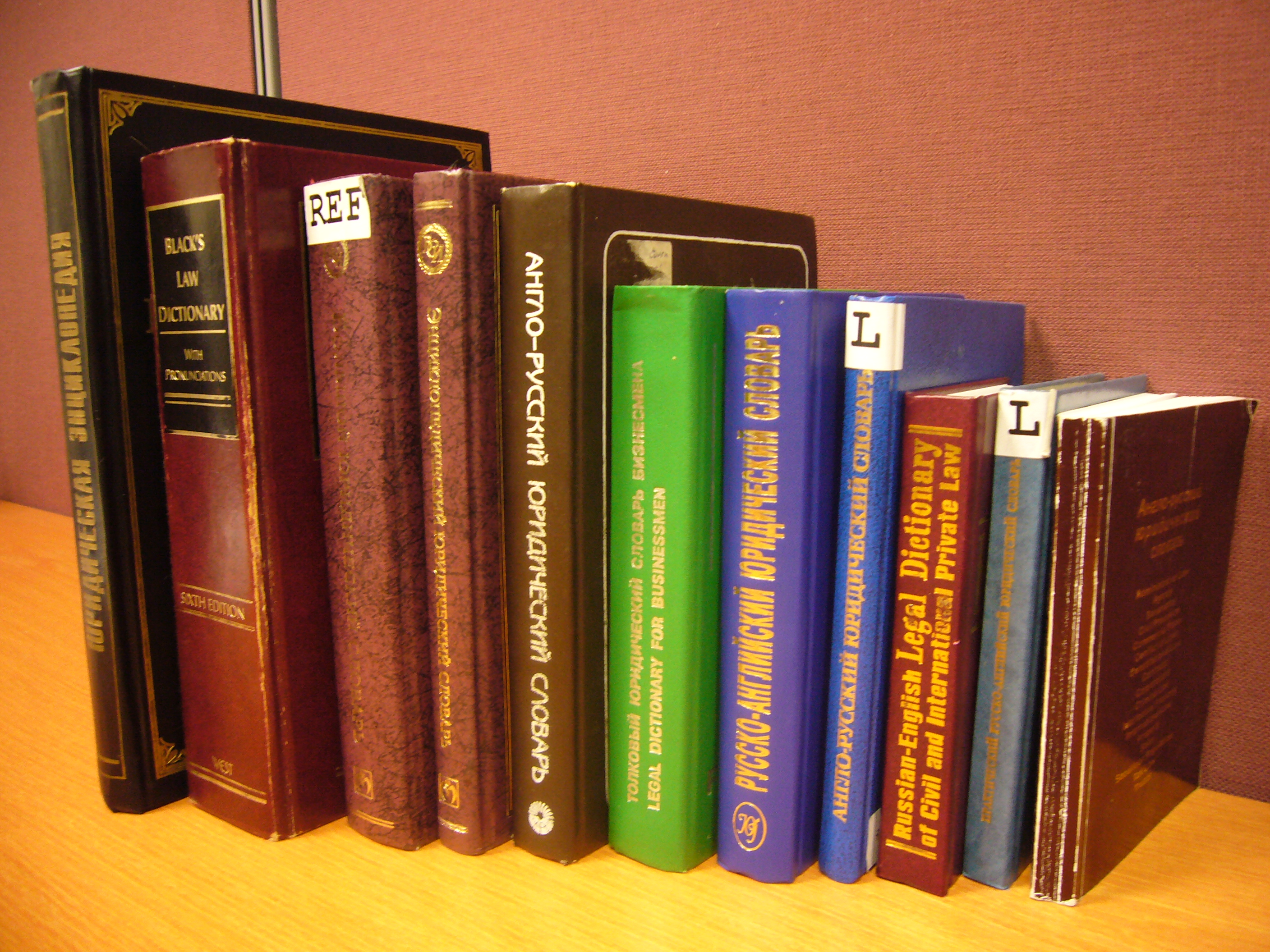
You can start by reading all of these highly entertaining tomes.

Credit: Leonid Dzhepko, Legal Translator

And if you don't have time to go to law school, you can try some practical solutions instead.  Turns out there are things that everyone can, and should, do, without shelling out extravagant legal fees and bankrupting themselves even further in the midst of a crisis.  It's important to be aware of your options, so that if you need to, you can get your affairs in order quickly and efficiently.  Recently, I sat down with Peter Ollen, attorney and owner at OllenLegal.com, and he told me just how to do that.

"The most important thing," he says, is to "have a properly executed will, witnessed and notarized.  And make sure it's retrievable."  This is the ideal scenario.  It seems simple, but an an ABC poll from last August suggests that only half of all people have a will.  A 2011 article from Business Insider puts the number of people without a will closer to 60%.  And the percentage of young adults under thirty who haven't penned their last wishes is reported to be 92%.  Very basically, you need to have everything you want or need written out in detail, make sure it's legally binding, and know where to find it.  "If not," Ollen says, "There's a default pecking order.  Absent of a will, spouse or parents make your decisions."  There are also taxes involved with death, and you have to make sure all those pesky bills are paid, otherwise loved ones may get stuck with them.

But what if you're young, like say, my age, and something happens to you, similar to what I went through?  How do you have your affairs together then, when you've barely started out in life?  "There are resources online," says Ollen.  "You can buy forms from LegalZoom.com, for instance, that are guaranteed resources.  You can also reach out to your state bar association; they have pro bono and basic guidance available for these situations.  If you don't have the resources to get an attorney, reach out to LegalZoom or other document depos.  They can offer guidance and the state bar may be able to fill out the forms for you.  And, if you're worried about your time or escalating situation, give someone power of attorney so they can handle all this for you, while you focus on the bigger issues."

These guys know what's up. 
Credit: Daniel Schwen

You can't always think clearly in the midst of a health crisis.  I know I couldn't.  So it's a good idea to get things squared away before you ever get into one.  If you're getting to the point where it's difficult to juggle, Ollen suggests that you assign someone power of attorney.  Make sure it's someone you trust, like a family member or spouse.  They'll handle all the legal decisions for you, while you focus on what's really important -- your health.

I didn't have a will going into my cancer diagnosis, or a power of attorney.  I ended up writing a letter that I would have tried to pass off as a will had things gone awry.  But simply having something in writing isn't enough.  Unless, like me, the point of leaving something behind was more for the message you planned to send your family and friends, than it was for the material goods and wealth.  Even so, what little you have to give could inspire debate among your loved ones, and even turmoil.  Any amount of stressing over who gets what in a time of loss can trigger intense emotional reactions.  It's better to be safe and settled, than not have a plan at all.

Tuesday, July 16, 2013

I Wrote My Will at 26

"And my collection of geographically accurate boogers goes to..."

I wrote my will at the age of 26.  It's infused with comedic zingers, and is in no way legal -- but hey, it's a will, nonetheless.

During the period leading up to my second surgery, after I was diagnosed with cancer at 25, I wrote what would become a symbolic offering of what little I had in those days.  I wanted to have something in writing that would tie up all the loose ends in my young life.  Turns out, having lived only a quarter of a century, there weren't very many loose ends to worry about.  Though I'd heard that it's better to have something in writing than to check out without making any kind of arrangements.  Turns out that isn't entirely accurate, but I didn't know that at the time.  So I drafted this letter.  No one knows that I did this, not even my family.

At the time, I was doing a lot of sitting around and feeling sorry for myself.  I laid on the couch at my parents' townhouse, watching TV, curled up under a snuggie, slowly losing the ability to cope with my evolving circumstances.  Mostly though, I was feeling sorry that I had to leave my family, and that I had nothing to offer that would soften the blow.  The thought of dying so early, loved ones gathered around to bury me, their faces twisted in mourning, was too much to bear.  It spawned thoughts of my parents splitting up, my sister's new marriage falling apart, and all three of them slipping further into the depths of grief, never to return.  And all that would be my fault.  I would be the cause of so much suffering for the people I cared about most.

My parents were getting older, and money was getting tighter and tighter.  My sister had gotten married during the summer, two months before I was diagnosed with cancer.  Mom and Dad paid for the majority of the wedding.  Shortly after, they'd sold my childhood home and bought a townhouse an hour up the road in State College, PA.  In doing so, they signed on to another mortgage, late in life, against their better judgment.  None of this would've been a problem, had I not shattered the illusion of youthful permanence and gotten myself all genetically mutated.

"There's a pen growing out of your brain, just like this."
Source: National Cancer Institute

The day of my first surgery was the day my parents closed on the new townhouse.  I sat in the office with them, that morning, listening to small talk thrown out by the lawyer and the real estate agent, all the while doing my best to remember that life hadn't stopped for them as it had for me, and they didn't have any idea that directly following this appointment I was hopping in the car with my family and traveling three hours to Pittsburgh to go under the knife for the first time in my life.

I also knew that this was cancer, and that it could very well be terminal.  That thought never left my mind.  I wanted to reach over to the console and hit the reset button like I'd done so many times as a child, sitting cross-legged in front of the TV in the basement, controller and princess-saving aspirations in hand.  But there was no reset button in my case.  I would be forced to deal with whatever came next, no matter how horrible.

Now that I think of it, Kirby kinda looks like a tumor...
Source: Andrew Evans

The possibility that I wouldn't make it loomed over the car on our drive to Pittsburgh like a dark cloud, hovering like a silent threat.  For a long while, I was able to stare right back into its core, challenging its authority over me.  Clouds like that cut through to your soul, and wear down your courage over time, until you begin to see the world, and the possible end of yours, in a more practical light.  "Well," you eventually say, stealing a glance at the blackening sky, "Maybe now it's time to prepare for the worst."

I wanted to provide for my family, but at the age of 26, I had nothing to provide.  And I realized how sad it was that I had to write a will with no real "willing" involved at all.  The only thing of real value I could give away were the emotions I felt for the people who would read it after I was gone, and I spread them liberally throughout.  I needed to make sure they all knew how I felt.  And if I couldn't give them anything of material value, I would leave my family and friends with a message of undying love.  I didn't want to leave my family without giving them something in return.  They had given me so much already.  Thoughts of Indiana Jones and the Temple of Doom ran through my mind, and the introductory scene where Harrison Ford is stealing a jewel and replacing it with a bag of sand to avoid setting off the trap.  My family had handed me a great jewel -- a lifetime of opportunities, love, and support, and I had only this crummy bag of sand to offer in return.  It didn't work in the movie, I thought, and it won't work now.

My 26th birthday was spent hobbling over to my sister's house for dinner, ice cream cake, and presents.  I was still healing from that first surgery, which was actually a two-fer that included separate procedures.  It was a combo situation like you find at family restaurants.

Me: "I'll have surgical combo A, please."
Waitress: "Would you like that with or without post-surgical bruising?"
Me: "Oh, I don't know.  What do you recommend?"
Waitress: "I recommend the bruising.  You won't be able to sit down practically anywhere, and you'll break the towel rack in your sister's house the first time you have to poop."
Me: "Interesting.  I guess I'll give it a go."
Waitress: "Excellent choice.  And how about a side of surgical drains?"
Me: "Hmm... I might pass on those this time."
Waitress: "Sounds good.  You make sure to try them next time."
Me: "Thanks, I'll keep the drains in mind."
Waitress: "I'll be right back with your IV and a pre-op syringe.  You'll be seeing pelicans and singing obnoxiously in the key of F in no time."
Me: "Can't wait."

"I'd like to avoid the anal leakage, if possible."
Source: Alan Light

I was uber sensitive to the situation in which I found myself.  I had just gotten through my first set of procedures to remove lethal cancer from my body.  I was just 26.  Though I'd dated a lot, I'd only had a few real adult relationships, I'd only had one real job of any import, I'd never made a splash, and at this point it was possible that I never would.  I had nothing to leave behind; I had no legacy.  My whole life, I'd wanted to be a writer.  I hadn't done much to pursue that goal, but I began to write a memoir about my experience with cancer.  And then I wrote a will.  I decided that I could write at least that much.  It was possible that I'd be dead, and the memoir would never be finished.  This will, or letter, would be my legacy.

And so I wrote the letter that would become my will, in the hopes that someone would take pity on me and see that my family survived the worst case scenario.  Because, at the age of 26, without any real prospects, pity was all I had.  Which lead me to thinking, "What should I have had at this point?"

I'll be answering that question in a series of posts that I hope will help shed some light on how easy it is to be prepared for life's worst case scenarios.  In Part 2, we'll talk about the legal issues associated with end-of-life situations, as well as what the average, healthy person should have in place.