Showing posts with label Cancer. Show all posts

Friday, February 14, 2014

Happy Valentines Day!

A warm hello to everyone on this, the day of the celebration of love.  Whether you agree with the consumer culture associated with the holiday or not, it's still a great time to refocus on positive energy and modes of thinking.  Today is the celebration of love.  


I especially wish all of my cancer survivor friends a Happy Valentines Day, because I know how difficult it is to be inspired by a celebration of something you no longer think you deserve, or can ever find again.  I hope that you are all as lucky as I am, having found that love again, and feeling all of the associated emotions along with it, like for instance, sometimes she's a huge (censored: most beautiful lady ever!).  Just remember that there are a lot of people out there, and you have something to offer all of them.  

And that about wraps it up.  Find your loved ones and have some fun.  

Friday, December 20, 2013

My Cancer Brings All the Crazies to the Yard

In today's day and age, it's important for the patient to be his or her own advocate.  It's an unfortunate reality, but as soon as something happens to you, you've unwittingly opened yourself to an entirely new world that you may not be prepared to successfully navigate.  And, while doing your best to focus on the issue at hand, it's easy to be taken in by snake oil and pseudoscience.  There's nothing worse than a cancer opportunist -- someone who uses your illness to his or her advantage, pushing ineffective and sometimes dangerous products and treatments.  I talk about some of my favorite fake treatments in another post, The Dangers of Alternative Health: 3 Treatments That Can Cause Some Serious Damage.

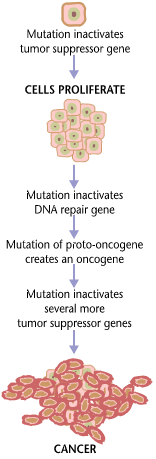
The thing about cancer is that it's a biological process -- several, in fact, occurring simultaneously.  Cancer is a series of genetic and epigenetic malfunctions.  It isn't caused by any solitary force.  And it certainly isn't caused by mysterious "toxins" with no names or identities.  It isn't caused by your attitude either, or your karma (by the way, the western definition of karma is not even entirely accurate), or even when your room mate peed in the mini fridge in your dorm room the night he was really drunk.

The process looks like this.
Having cancer is a desperate situation for many people.  And it brings out the best and worst of the human race.  There are several reasons to be wary of anyone who tries to sell you something when you need it most.  The sad fact is that many people fall prey to these villains, foregoing entry into legitimate treatment programs and significantly decreasing their odds of survival.

The first and most important line of defense is to do your research.  In today's culture, fact-checking has become a long-forgotten practice.  Claims are made, and whoever yells the loudest is always declared the most honest.  That's not how science works, unfortunately.  In the real world, experts propose hypotheses and test them until they can be fully evaluated and verified.  And, as Neil deGrasse Tyson put it, "The good thing about science is that it's true whether or not you believe in it."


For whatever reason, the age of information has had the opposite effect of informing the public.  It could be that with all of this information at hand, it makes it easier for people to believe that they know much more about a particular issue than they really do.  It still takes years of schooling to become an expert in a given field, like oncology.  The danger arises among those who falsely profess a knowledge of healthcare and push miracle cures on the public that only they have uncovered through collecting pee from public parks, or shooting coffee into your rectum.  It's not easy to determine whether or not modern snake oil salesmen peddle their wares with the intention of making money from their faulty products, or if they genuinely think what they're doing will provide some benefit.  I tend to believe the former in most cases.  The current state of healthcare in America reminds me of my favorite quote by science fiction writer Isaac Asimov: "Anti-intellectualism has been a constant thread winding its way through our political and cultural life, nurtured by the false notion that democracy means that 'my ignorance is just as good as your knowledge.'"

All of these alternative therapies will bankrupt you, because they're obscenely expensive and your insurance won't pay for them, because they aren't medicine.  Mainstream healthcare is also extremely expensive, to be fair, and the U.S. is by far the most expensive nation in which to get sick.  But there is a mechanism in place to at least ensure that a patient can find treatment backed by real medical science.  If you aren't sure how to find out whether or not a treatment is bogus, just look for the clinical research.  Real treatments are published, peer-reviewed, and independently verified over a number of years in order to ensure their safety and effectiveness.  Cancer is tricky, because we can't at this point cure it, and that scares many people into thinking that's because traditional treatments don't work, when really it's just the best we can do at this point.  With the advent of new immunotherapy research, results and patient outcomes are looking even more promising these days, and we can expect a new wave of even more effective treatments very soon.  Human innovation is a process.  Yes, people are greedy, and things still cost money.  But the most villainous and greedy among us are the opportunists who take advantage of the desperation of others.

Wednesday, December 11, 2013

Holiday Cheer, With A Little Death Mixed In

I realize I would have thrown up this morning, had I let myself.  This morning, all of last night, and probably all of yesterday had I not been occupying my time playing video games.  My mother came down at eleven to say goodnight.  “Are you going to bed?” she asked.  I told her I would.  “Are you worried?” she asked.  I blew up in her face, because I’d been marathon-ing Skyrim precisely so I wouldn’t have to think about how worried I was.  It was some time before we were able to settle the issue and she went to bed.

This morning was six days after the stuffing, the cranberry sauce, the turkey coma, and the mashed potatoes with the butter poured in the middle to dip in.  Six days after I’d made all the pies: an apple, a pumpkin, an apple dumpling, and a mighty scrumptious pumpkin cheesecake.  I’m still home for the holiday.  My girlfriend left on Sunday, and I wasn’t able to go with her.  We found a mass Wednesday night, just before Thanksgiving.  I had been diagnosed with cancer in 2011 at the age of 25, so I kept my potential recurrence to myself through the holiday, since I’d seen the effects of this kind of news firsthand, and I didn’t want to ruin the festivities for everyone.

This morning was also four days after the champagne toast my mother arranged to celebrate the one-year anniversary of the completion of my cancer treatment.  “What’s the best kind of champagne?” she’d asked me just days before.  “Can you get some cheap?”  I’d learned from a college roommate that Korbel was the best cheap champagne and I told her so.  I immediately knew something was up, because she only asks me questions like that when she’s getting me something.  And I couldn’t for the life of me figure out why she would be getting me champagne.  Cancer was that far from my mind.  Then I found the mass, and I had felt like a fraud, clinking glasses, smiling around the table, knowing full-well that I might once again be actively dying.

No matter the outcome of the poking and prodding that was to come, I was once again faced with the knowledge that I had had cancer, and that I’d had three surgeries and an awful, year-long treatment to prevent it from coming back, all in my mid-twenties.  And that being so young, I had significant reason to think it might rear its ugly head sometime down the long road ahead.

There was a New York Times article about this over the summer.  The quoted findings, from Dr. Alex J. Mitchell at the University of Leicester, stated that 18% of young adults remain severely anxious about their experience with cancer two to ten years after being diagnosed.  In couples, that number rose to 28%, with 40% of spouses reporting above-average levels.  The anxiety is real.  I feel the complete set of fears rise up in my neck, the pain of every hair on my body standing sharply at attention, whenever I think I might have found something suspicious poking out.  And that will never change.  I feel guilty every day because I’m in a happy, healthy relationship with someone I truly care about, and what all this must mean for her.

Studies also suggest the same is true of depression, though I’ve personally avoided the brunt of that.  Aside from a stint with chemical depression induced by my immunotherapy treatment, I’ve been my father’s son -- an unfailing optimist.  When I was first diagnosed, and during the ensuing year of treatment, which some refer to with such cavalier terms as “battle,” “struggle,” or some other equally obnoxious buzzword, I went to therapy regularly to work through a healthy episode of PTSD.  According to a study done by Dr. Mary Rourke at the Children’s Hospital of Philadelphia, I’m not alone there either.  By evaluating one hundred eighty-two survivors of pediatric cancers, she found that 16% had PTSD.  Dr. Rourke concluded that young adult cancer survivors experience more psychological problems than the general population.

It’s no wonder then, sitting over my healthy serving of dark meat, watching my family laugh and drink, watching my girlfriend for any obvious signs of hating my family, that I felt a sense of dread underneath it all.  What if I don’t have many more occasions like this?  No more holidays, no more fun times with the family, no more hoping my girlfriend will get along with the craziest, most inappropriate members of my clan.  Looking around the table at the smiling faces, I asked myself, what if I don’t have any more holidays at all?

This morning I had an ultrasound at the local hospital in town.  My family doctor doesn’t have the little stick thingy or the gel at his office, so they made me wait while the hospital took forever to schedule an appointment for today.  To my (pseudo) relief, the tech didn’t see anything unusual.  My Physician Assistant best friend reminds me that techs are not doctors, and the official results are still pending.  I am not fully relieved, nor will I ever be.

I am now 28 years old, and this is what I’ll be doing for the rest of my life.  I love my family, and my friends, and I hope to have a long, prosperous life in a career that satisfies me, with a partner by my side who complements me and fills me with joy.  There is a dark cloud that lingers above me, threatening to take it all away at a moment’s notice.  I willingly pay it no mind when it’s unreasonable to do so, but that only means that when I have a legitimate scare, it comes back in full force.  It took a long time to come to terms with this pattern, but I realize that it will always be a force in my life.  Only at times like Thanksgiving, when I can sit around a table with the people who are most important, laugh, play games, and drink cheap champagne, that I realize how lucky I am to have had any of it at all.

Friday, October 11, 2013

Graduation Day: Dying From Cancer To Clean Scans In One Easy Step

I had my checkup at UPMC Hillman Cancer Center recently.  In the days leading up to the appointment, I was, as always, irrationally paranoid about every bump and bruise and utterly convinced that I had only days left to live.  "What the hell is that??" I'd say in the shower, only to find that the offending lump was in fact some completely normal anatomical part that was supposed to be where it was and had been for the prior 28 years of my life.  One day I found something really large that turned out to be my bicep.  Is it supposed to feel like that??  Jesus.

I'm pretty convinced that I also manufactured a crisis by feeling up the nodes in my thigh so much that I bruised the area around my junk, causing me to worry about the "strange sensation" so much that I began to formulate my last goodbyes and figure out who I should give my surplus of Magic cards to (they aren't even legal to play anymore, but what did you expect from a young adult cancer survivor -- a current deck of Magic cards?  What, am I made of money?).  At the appointment, the PA noticed similar bruising in the nodes between my armpit and chest, which had previously been described to me as "bumpy."  It was at this point I wondered if I could actually give myself cancer from checking so hard for signs of cancer.  Or at the very least, a severe case of internal bleeding.  Then I thought of the scenes from every medical drama in history where the doctor comes out and says very sadly, "I'm sorry, we can't stop the bleeding."  And I think to myself, Wait, what?  Don't you have like science and bags of other people's blood and stuff like that?  I mean, wrap it in a t-shirt for God's sake.  And I think of how much I would really disapprove of being the subject of one of those scenes because I pressed too hard while checking my nodes.

"I've taken out half of your bones and hung them on this pole here, and from these scans it looks like all of your blood has come with it.  I've done everything I can."

I did my X-Ray, blood work, and obligatory waiting room meditation before they called me back and stripped me down.  I met a new PA student who checked me over and wanted to talk about what I was doing in life, and all the bizarrely existential things people say to one another with eerie lightness during an initial meeting, and all I could think about was how bumpy my nodes were.  I stumbled through the conversation until the regular PA came in, who I'm very comfortable with and who has made this whole close to death thing a little less crappy.  As it turns out, all my worrying was for nothing (isn't it always?  Worrying is, by its very nature, useless).  The X-Ray was clear, which meant my core was not filled with death, and the blood work confirmed that, yes, my blood was mostly made of blood, and not terrifying cancer Legos waiting to combine into a macabre pirate ship and sail right into my brain (though the castle Legos were my favorite [and I always made my mother buy them for Christmas and then put them together for me.  It was obvious at an early age that I wasn't going to be an engineer.).].

I also have one of those Immunotherapy Krakens in my blood, so I guess I shouldn't be too worried about it.

We talked for a while, because, even though we meet routinely at an appointed time to make certain I'm not actively dying, I like to think that she and I are friends.  Then, suddenly, she informed me that I had graduated to six months.  I was surprised, because I didn't think I'd be at six months for several years.  "Nope," she said.  "One year after diagnosis you go to four, and two years after you graduate to six."  I went into this appointment convinced that I'd have to replay the scenario after my diagnosis where I went around telling everyone I was going to die, and that I loved them.  And I came out of it not only with a clean bill of health, but with the added bonus of being considered healthy enough to last an extra two months on my own at a time.

As a young adult cancer survivor, I will never stop worrying about dying before I've lived long enough to leave my mark, to positively affect the world, and do whatever other things my mother would no doubt disapprove of.  Every time I make the trip to the doctor, all of the emotions surrounding my initial diagnosis come flooding back.  But in a strange, dissociated kind of way because the memories have faded, and all I really feel now is that I'm submerged underwater in a claustrophobic sea of negativity.  The sensation causes me to find things that aren't there, and to worry myself into a bad place.  I blame this partially on the come down from surviving cancer, the getting back to "normal."  I have a wealth of experience with life and death and priorities and trivialities, intense emotions spawning from serious existential crisis, and the lessons that facing a terminal illness can teach you.  But all of this fades when the tests start to come back clean, and distance begins to seep in between you and what almost prematurely ended you.  In the future, I'd like to be more conscious of the divide, and learn how to better reconcile the urgency I used to feel with the humdrum of daily life.  It's a lofty goal, though I'm sure it's possible.  I'm not the only cancer survivor, stumbling through life trying to make sense of it all.  I'm sure I'll get there.  After all, I have at least six months to do it.


Photo credits: Top -- A doctor looks at an x-ray, by Ron Mahon

Thursday, October 3, 2013

Cancer Research Institute 60th Annual Awards Gala

This past Monday, September 30th, I attended the Cancer Research Institute's 60th Annual Awards Gala.  The organization was nice enough to invite me and my girlfriend as guests at the event, where the leading researchers in the field of immunotherapy were assembled to discuss and receive due honors for their work.  Nightline anchor and ABC News correspondent Bill Weir emceed the event, and award recipients included Dr. Bahija Jallal, executive vice president of AstraZeneca, Dr. Jill O’Donnell, CEO of the Cancer Research Institute, and Sean Parker of Napster fame.  I myself was showcased at one point as a survivor, along with a few others, like Emily Whitehead, Mary Elizabeth Williams, and Sharon Belvin.

Look at that handsome fellow up on the screen.
The event was held at Cipriani 42nd Street, a massive architecturally stimulating venue.  Formerly the Bowery Savings Bank, the impressive space lies just across the street from the Grand Hyatt hotel and Grand Central Station, and down the block from both the Chrysler and Lincoln buildings.  A huge stone archway greets visitors, ushering them into a large dining hall surrounded by modified Corinthian columns that terminates in a second archway housing an enormous rear window silhouetted by velvet curtains.  Remnants of the Bowery savings Bank remain, with the dining room separated from the foyer by a framework of teller windows, and the entrance lined with deposit counters complete with pens on chains (that this writer found unpleasantly lacking in ink during an exchange of contact information).

I felt a little like I was in the Colosseum, waiting for a lion to pop up out of the floor and try to eat me during dinner.
Dinner was served in three courses, the first being a scallop salad (that I wished I could take home and love forever, and doubly enjoyed because my girlfriend doesn't like scallops), followed by filet minion or sea bass, and a rich chocolatey masterpiece that gave me four types of diabetes (how many are there?).  Though I'm trying hard to keep my vegetarian ways, I even had a bite of the filet.  Don't tell anyone, or I'll lose my street cred.  My table was filled with fellow melanoma survivors, and we had much to discuss about the role of immunotherapy in our lives.

The musical guest, folk-rock duo Johnnyswim, came out with an appropriate mix of melodic tunes that relaxed and uplifted the crowd at the same time.  Once described as “21st century troubadours,” the duo serenaded a captive audience through the entrée course with a short set.  Though the acoustics at Cipriani were not optimized for the band, and at several points our table discussed the possibility that the venue chose to forego a sound check, the band spoke well enough with their sound to make up for the lack of clarity.  I didn't hear a word either of them said between songs, but from the heavily reverbed noises they made that might have been words, it seemed like they were very much in tune with the event and happy for the opportunity to play the gala.  Co-founder Amanda Sudano had a more personal reason to be there, as she happens to be the daughter of the late Donna Summer, who succumbed to lung cancer in 2012.

The event was a huge success, in my opinion, for many reasons, namely, 1), it encouraged ongoing research into the most promising field in oncology today: 2), it brought together the leading minds in the field for debate and discussion into the latest findings: 3), it brought together those of us who've directly benefited from immunotherapy, and provided an environment in which we felt comfortable talking to other survivors and researchers alike: and 4), because I personally haven't been to many events like it, and it was a fantastic introduction into a larger part of the cancer community.

I tried to make a deposit during the event, though all I had on me was an acute case of alcohol poisoning from the open bar.
CRI's 60th Annual Awards Gala represents the future of oncology.  The most promising treatments are now coming from the field, and the organization continues to be at the forefront of a bright and hopeful future.  We're getting real results due to the efforts of CRI and its donors and sponsored researchers.  There are so many good things to say about the event, that it's hard to find anything negative.  The strangest feeling for me occurred when I realized that I was in an environment where it was okay to be my complete self.  Usually I'm holding back the survivor aspect of my character when in public, because, as a general rule, terminal illness makes people uncomfortable.  I was allowed to let go at the gala, and enjoy myself in a way that I haven't in a long while, around people who genuinely understood and were trying to help, because everyone in attendance was all in this crazy world together, all working toward a common goal, whether as a survivor, researcher, donor, or in another supporting role.  It enveloped me in a sense of community, and I very much hope to continue my involvement with the Cancer Research Institute's efforts in the future.  If you'd like to donate to their efforts, please consider doing so here: Ways to give to CRI.

Wednesday, September 18, 2013

Happy Birthday! Tales Of An Aging Cancer Survivor


My birthday is coming up.  It'll be the first birthday I've had since treatment ended.  My birthday, my birthday, my birthday.  I suddenly can't stop saying the words.  Soon, I'll be officially one year older.  Bring on the years, I say.  The looming shadow of untimely death may still follow doggedly at my heels, but it's less and less relevant.  Like an aging pop star, grasping for attention in the tabloids by snorting things and banging things and hanging other things out windows.  Such is the state of my conscious thoughts on the subject of the decay of my physical viscera.

All thugs and chumps must inevitably grow up.  But not all thugs and chumps must like it.  This one does.

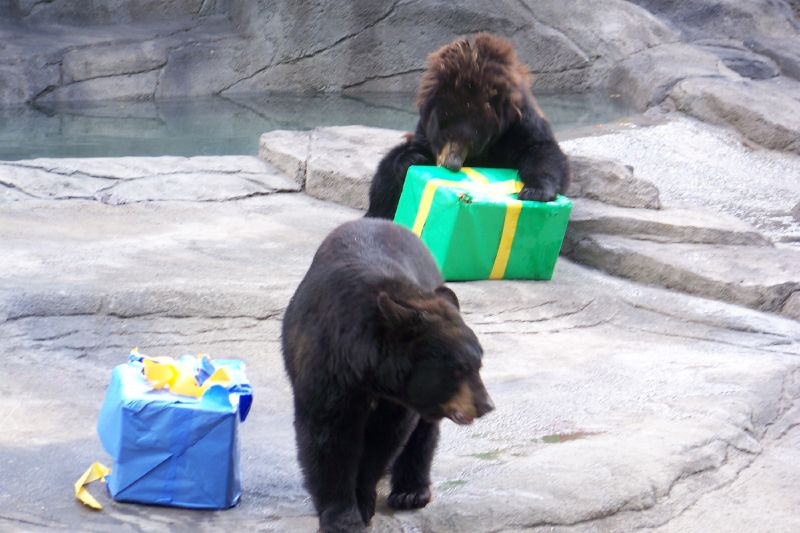
Birthdays attract bears.

To be honest, I haven't thought much about it until I was reminded of the approaching date.  And then, I didn't care enough to really process the information until I sat down to write this post.  Now I can't stop myself from feeling elated at the prospect of the number of years I've been on this Earth getting, well, more numerous.  So it is with complete and utter childlike eagerness that I say, more numerous numbers please!  May they grow and grow, until a harvest of numbers shall be laid out in a banquet of the wealth of my years, garnished with the love of those I hold dear.

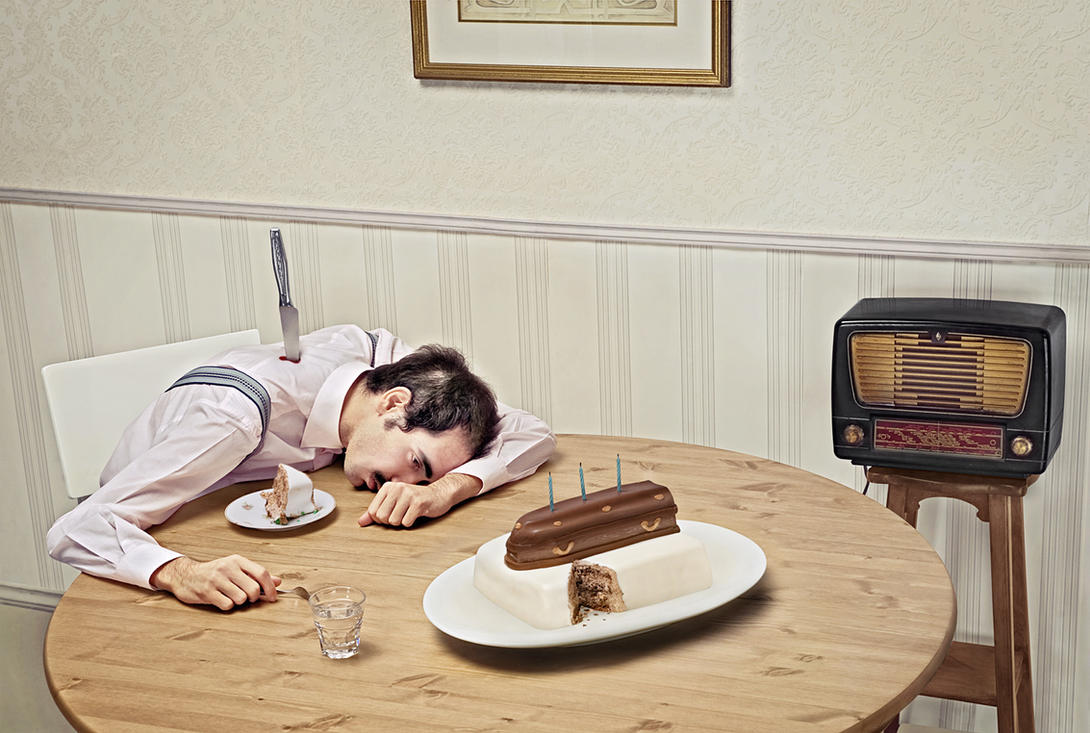
If Dad tries to eat all of my cake again this year...

Sorry about that last part.  I get all sentimental when I think about not dying and instead spending the time I could have spent dead with the people in my life that I like the best.  It's a simple thing, really.  But often overlooked among the day-to-day.  Most people dread this birthday stuff -- I used to.  I never wanted to make a big deal of it, and I didn't want to remind myself that I was chipping away at my youth, just by standing back and watching the sands filter through.  Age is something we can't control, and getting older is mostly terrifying.  It seems almost like a punishment.  Dealt to us for no apparent reason, and without just cause.  What have we done to deserve these advancing years?  These days, I ask the same question, but with a very different twist.  What have I done to deserve another birthday?

Image credits: Top -- HAPPY BIRTHDAY, by ritchielee via flickr; Middle -- Cleveland Zoo's birthday party, by Yvonne via flickr; Bottom -- murder on birthday 3, by Murat Suyur via deviantART

Tuesday, September 10, 2013

How Would You Want To Die?

Today I tripped over my total gym while moving to a new exercise and caught myself awkwardly before face planting and spilling my brains on the floor.  Then, after the workout, I slipped in the shower, bouncing on one foot to keep myself from falling (which is something I always do when I slip in the shower that makes next to no sense, because if you slip with the other foot, you have nothing left to save you and will surely die).  I sprayed my new leather shoes this morning, reading on the back of the label that the chemicals "can cause flash fires," and I day dreamed about being swallowed in a cloud of fiery death.


I got to thinking very quickly, in this maze of macabre disaster I call a home, about how I'd actually like to go out.  Having survived cancer already, I have conflicting opinions on the subject.  After surviving a life-threatening tragedy, you don't particularly want to go out in just any lame, regular sort of way.  You want some even more intense option, like drowning after saving everyone you love from a sinking battleship, or fighting off an alien invasion.

Other people are also aware of this fact.  I was crossing the street the other day with my friend Darrell, and when we got into the bus lane he held out his hand and said, "Watch out for buses.  You don't want to be run over by a bus after you lived through cancer."  And I'd say that's pretty accurate.

On the other hand, after surviving a horrible, traumatizing disease, it's easy to want to pick the most mundane way to die possible.  Sometimes I think I want to go out in my sleep, with no pomp or circumstances whatsoever.

"You planning to get up soon?  Nope?  Okay then."

It might be best to do that, and avoid all the messier ways, like sword fights with giants and skydiving snafus.  That way, everyone will have a semblance of closure.  Instead of, "If only he would have spent more time in the gym practicing his melee skills (because everyone knows giants have a resistance to elemental spells)," it would be more like:

"How did he die?"
"Why, in his sleep."
"Oh.  Well that's not very dramatic."
"Why no, not at all."

Something like this might be pretty ideal: *Read, read, read, read, read, read, read, read, DEAD*

So which is it?  After surviving cancer, I kind of get the notion that I won't be able to pick.  The natural progression (or random assertion of unconscious power) of the Universal DJ really doesn't leave any room for requests.  As much as I go back and forth between two extremes, I doubt that anything that has any control over how I go out cares in the least.  It's going to happen the way it does.  It almost did already, in a completely senseless and eye-opening kind of way.

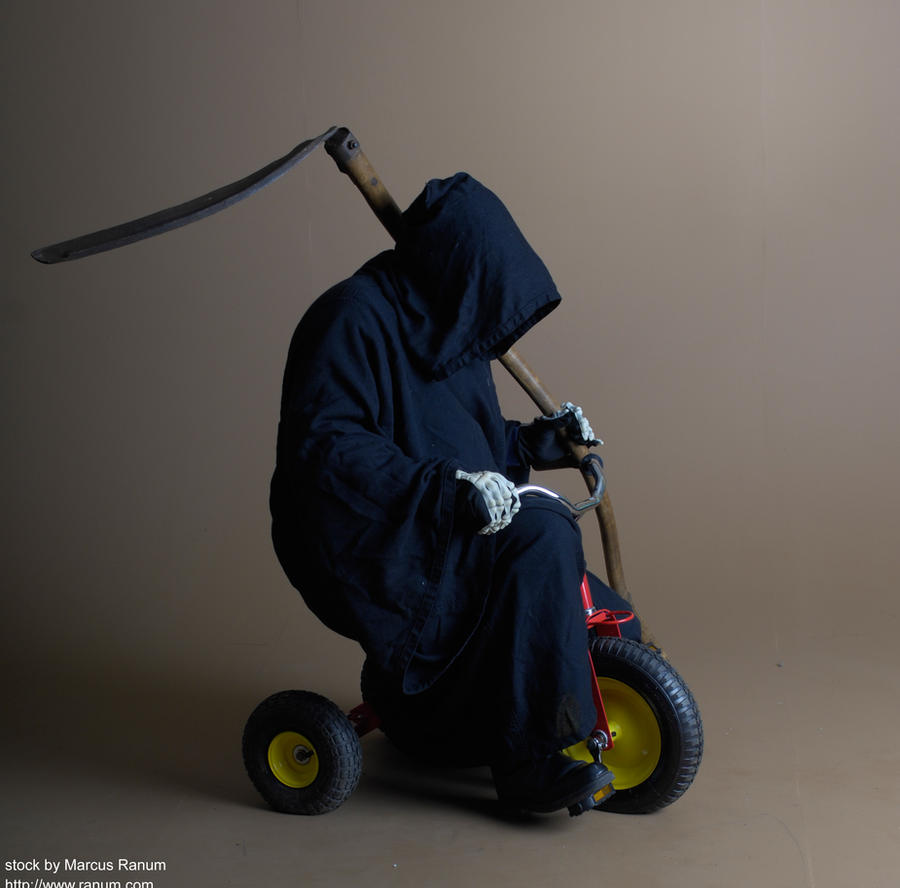
"I'm coming for ya.  You know, eventually."

Whatever it is, I hope that the way I choose to live inspires someone.  Anyone.  And that the manner in which I leave this place is entirely washed away in the memory of what I added to it.

Image credits: Top -- Monster Shower Sign, by derekdavalos via deviantart; Middle -- Horse Sleep, by Ian Webb via flickr; Mid Bottom -- Studying and Sleeping, by mrehan via flickr; Bottom -- Death Rides a Pale Trike, by Marcus Ranum via deviantart

Wednesday, August 21, 2013

I Used To Smile All The Time

Yesterday, I punched out a smiley face in the big pile of soap in the sink.  Because everything deserves to be happy.  

Recently, my girlfriend told me to smile more.  I was upset about this, because I tend to think I'm one of the happiest and most carefree people in the world.  I have the history of manifesting positivity in the face of great tragedy to prove it.  After I thought about it, however, I began to realize that although I think about the world now in very clear, concise modes, and although having such a clarity of perspective is inexplicably amazing, it doesn't necessarily mean that happiness will automatically follow.

I've been under a dark cloud for a long time, and my goals and my perception have been crystal clear since I was diagnosed.  "I want this, this, and this," I said, as soon as I found out I had cancer.  And I immediately set out to achieve those things.  Some of them were easy, others of them aren't yet fully realized.  I'm still hurting in certain ways after my experience, and the fact that I'm focusing on ways to fix that, instead of complaining and feeling sorry for myself is great, but it doesn't mean that it makes me happy, entirely.  Because happy is an attitude, and I'm working on that.  I still feel like I'm happier than the average bear, especially considering I know for a fact it's worthless to go through life being anything but.  I just think I've been too concerned lately about conditional happiness.  "When I get XYZ, I can finally relax..."  Except that getting to XYZ is a huge journey, full of unforeseen obstacles and circumstances.  And you still have to live your life while you get there.  This is a pretty common attitude, and it manifests itself in several ways:

"When I get that promotion I can finally relax" -- Spoiler alert; it'll never be enough money.

 "When I meet someone who makes me happy, everything will get better," -- Not necessarily; you generally need to be happy with yourself in order to attract someone in the first place.

"When I lose the extra weight, I'll be so much happier," -- I don't know, will you?  You'll still be you.  Be happy now, and lose the weight if you want to, not because you feel pressured to do so.

Conditions, conditions, conditions.  It doesn't matter what level of priority they have in the grand scheme of things, all the way from "I'm unhappy at my job and won't be satisfied until I get a new one," and all the way to, "I'm killing my family financially post-cancer and need a book deal soon or we'll all starve."  Conditions are a matter of perspective, but that's a thought for another time.

So, stop focusing on the conditional.  It'll be great when it comes.  But deal with your life while you have it, in the most fundamentally satisfying way possible.  Because, seriously, what's the alternative?

Wednesday, July 24, 2013

I Wrote My Will at 26: Part 2, Health Troubles and the Law


If you're thinking of putting your own last wishes into writing, or even leaving a crummy bag of sand behind for your loved ones to sift through, there are a few things you should know.  First off, I didn't have a legal bone in my body back then, and at this point the makeup of my bones is still pretty ambiguous, so please don't take this as a substitute for legal advice; it's a series of guidelines I've come by through my own experience with end-of-life matters.  If you have legitimate concerns, be sure to talk to an attorney.

Or maybe become an attorney yourself.
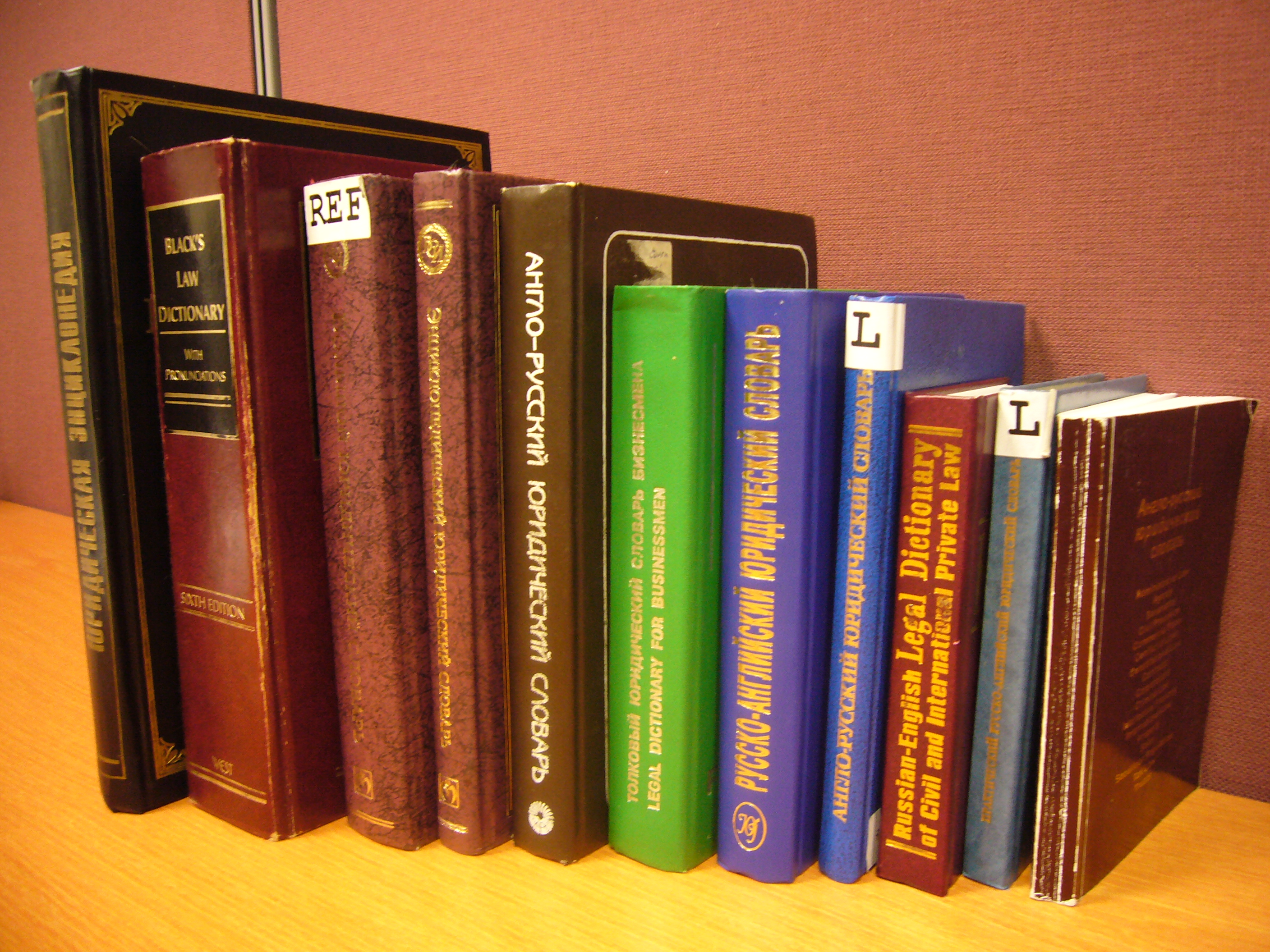
You can start by reading all of these highly entertaining tomes.

Credit: Leonid Dzhepko, Legal Translator

And if you don't have time to go to law school, you can try some practical solutions instead.  Turns out there are things that everyone can, and should, do, without shelling out extravagant legal fees and bankrupting themselves even further in the midst of a crisis.  It's important to be aware of your options, so that if you need to, you can get your affairs in order quickly and efficiently.  Recently, I sat down with Peter Ollen, attorney and owner at OllenLegal.com, and he told me just how to do that.

"The most important thing," he says, is to "have a properly executed will, witnessed and notarized.  And make sure it's retrievable."  This is the ideal scenario.  It seems simple, but an an ABC poll from last August suggests that only half of all people have a will.  A 2011 article from Business Insider puts the number of people without a will closer to 60%.  And the percentage of young adults under thirty who haven't penned their last wishes is reported to be 92%.  Very basically, you need to have everything you want or need written out in detail, make sure it's legally binding, and know where to find it.  "If not," Ollen says, "There's a default pecking order.  Absent of a will, spouse or parents make your decisions."  There are also taxes involved with death, and you have to make sure all those pesky bills are paid, otherwise loved ones may get stuck with them.

But what if you're young, like say, my age, and something happens to you, similar to what I went through?  How do you have your affairs together then, when you've barely started out in life?  "There are resources online," says Ollen.  "You can buy forms from LegalZoom.com, for instance, that are guaranteed resources.  You can also reach out to your state bar association; they have pro bono and basic guidance available for these situations.  If you don't have the resources to get an attorney, reach out to LegalZoom or other document depos.  They can offer guidance and the state bar may be able to fill out the forms for you.  And, if you're worried about your time or escalating situation, give someone power of attorney so they can handle all this for you, while you focus on the bigger issues."

These guys know what's up. 
Credit: Daniel Schwen

You can't always think clearly in the midst of a health crisis.  I know I couldn't.  So it's a good idea to get things squared away before you ever get into one.  If you're getting to the point where it's difficult to juggle, Ollen suggests that you assign someone power of attorney.  Make sure it's someone you trust, like a family member or spouse.  They'll handle all the legal decisions for you, while you focus on what's really important -- your health.

I didn't have a will going into my cancer diagnosis, or a power of attorney.  I ended up writing a letter that I would have tried to pass off as a will had things gone awry.  But simply having something in writing isn't enough.  Unless, like me, the point of leaving something behind was more for the message you planned to send your family and friends, than it was for the material goods and wealth.  Even so, what little you have to give could inspire debate among your loved ones, and even turmoil.  Any amount of stressing over who gets what in a time of loss can trigger intense emotional reactions.  It's better to be safe and settled, than not have a plan at all.

Tuesday, July 16, 2013

I Wrote My Will at 26

"And my collection of geographically accurate boogers goes to..."

I wrote my will at the age of 26.  It's infused with comedic zingers, and is in no way legal -- but hey, it's a will, nonetheless.

During the period leading up to my second surgery, after I was diagnosed with cancer at 25, I wrote what would become a symbolic offering of what little I had in those days.  I wanted to have something in writing that would tie up all the loose ends in my young life.  Turns out, having lived only a quarter of a century, there weren't very many loose ends to worry about.  Though I'd heard that it's better to have something in writing than to check out without making any kind of arrangements.  Turns out that isn't entirely accurate, but I didn't know that at the time.  So I drafted this letter.  No one knows that I did this, not even my family.

At the time, I was doing a lot of sitting around and feeling sorry for myself.  I laid on the couch at my parents' townhouse, watching TV, curled up under a snuggie, slowly losing the ability to cope with my evolving circumstances.  Mostly though, I was feeling sorry that I had to leave my family, and that I had nothing to offer that would soften the blow.  The thought of dying so early, loved ones gathered around to bury me, their faces twisted in mourning, was too much to bear.  It spawned thoughts of my parents splitting up, my sister's new marriage falling apart, and all three of them slipping further into the depths of grief, never to return.  And all that would be my fault.  I would be the cause of so much suffering for the people I cared about most.

My parents were getting older, and money was getting tighter and tighter.  My sister had gotten married during the summer, two months before I was diagnosed with cancer.  Mom and Dad paid for the majority of the wedding.  Shortly after, they'd sold my childhood home and bought a townhouse an hour up the road in State College, PA.  In doing so, they signed on to another mortgage, late in life, against their better judgment.  None of this would've been a problem, had I not shattered the illusion of youthful permanence and gotten myself all genetically mutated.

"There's a pen growing out of your brain, just like this."
Source: National Cancer Institute

The day of my first surgery was the day my parents closed on the new townhouse.  I sat in the office with them, that morning, listening to small talk thrown out by the lawyer and the real estate agent, all the while doing my best to remember that life hadn't stopped for them as it had for me, and they didn't have any idea that directly following this appointment I was hopping in the car with my family and traveling three hours to Pittsburgh to go under the knife for the first time in my life.

I also knew that this was cancer, and that it could very well be terminal.  That thought never left my mind.  I wanted to reach over to the console and hit the reset button like I'd done so many times as a child, sitting cross-legged in front of the TV in the basement, controller and princess-saving aspirations in hand.  But there was no reset button in my case.  I would be forced to deal with whatever came next, no matter how horrible.

Now that I think of it, Kirby kinda looks like a tumor...
Source: Andrew Evans

The possibility that I wouldn't make it loomed over the car on our drive to Pittsburgh like a dark cloud, hovering like a silent threat.  For a long while, I was able to stare right back into its core, challenging its authority over me.  Clouds like that cut through to your soul, and wear down your courage over time, until you begin to see the world, and the possible end of yours, in a more practical light.  "Well," you eventually say, stealing a glance at the blackening sky, "Maybe now it's time to prepare for the worst."

I wanted to provide for my family, but at the age of 26, I had nothing to provide.  And I realized how sad it was that I had to write a will with no real "willing" involved at all.  The only thing of real value I could give away were the emotions I felt for the people who would read it after I was gone, and I spread them liberally throughout.  I needed to make sure they all knew how I felt.  And if I couldn't give them anything of material value, I would leave my family and friends with a message of undying love.  I didn't want to leave my family without giving them something in return.  They had given me so much already.  Thoughts of Indiana Jones and the Temple of Doom ran through my mind, and the introductory scene where Harrison Ford is stealing a jewel and replacing it with a bag of sand to avoid setting off the trap.  My family had handed me a great jewel -- a lifetime of opportunities, love, and support, and I had only this crummy bag of sand to offer in return.  It didn't work in the movie, I thought, and it won't work now.

My 26th birthday was spent hobbling over to my sister's house for dinner, ice cream cake, and presents.  I was still healing from that first surgery, which was actually a two-fer that included separate procedures.  It was a combo situation like you find at family restaurants.

Me: "I'll have surgical combo A, please."
Waitress: "Would you like that with or without post-surgical bruising?"
Me: "Oh, I don't know.  What do you recommend?"
Waitress: "I recommend the bruising.  You won't be able to sit down practically anywhere, and you'll break the towel rack in your sister's house the first time you have to poop."
Me: "Interesting.  I guess I'll give it a go."
Waitress: "Excellent choice.  And how about a side of surgical drains?"
Me: "Hmm... I might pass on those this time."
Waitress: "Sounds good.  You make sure to try them next time."
Me: "Thanks, I'll keep the drains in mind."
Waitress: "I'll be right back with your IV and a pre-op syringe.  You'll be seeing pelicans and singing obnoxiously in the key of F in no time."
Me: "Can't wait."

"I'd like to avoid the anal leakage, if possible."
Source: Alan Light

I was uber sensitive to the situation in which I found myself.  I had just gotten through my first set of procedures to remove lethal cancer from my body.  I was just 26.  Though I'd dated a lot, I'd only had a few real adult relationships, I'd only had one real job of any import, I'd never made a splash, and at this point it was possible that I never would.  I had nothing to leave behind; I had no legacy.  My whole life, I'd wanted to be a writer.  I hadn't done much to pursue that goal, but I began to write a memoir about my experience with cancer.  And then I wrote a will.  I decided that I could write at least that much.  It was possible that I'd be dead, and the memoir would never be finished.  This will, or letter, would be my legacy.

And so I wrote the letter that would become my will, in the hopes that someone would take pity on me and see that my family survived the worst case scenario.  Because, at the age of 26, without any real prospects, pity was all I had.  Which lead me to thinking, "What should I have had at this point?"

I'll be answering that question in a series of posts that I hope will help shed some light on how easy it is to be prepared for life's worst case scenarios.  In Part 2, we'll talk about the legal issues associated with end-of-life situations, as well as what the average, healthy person should have in place.

Friday, July 12, 2013

The Dangers of Alternative Health: 3 Treatments That Can Cause Some Serious Damage

Source: Rangbaz
Alternative medicine, or folk medicine, has reemerged in recent years as an actual substitute for concrete medical science.  It's a concerning fad, since most people simply don't do the research required to filter out the dangerous and ineffective treatments from the ones that have shown real benefits in clinical trials.  And they give up or postpone conventional treatment in favor of some of these.  A decision like that should never be made light of, or insulted, because it can come equipped with a lot of emotional baggage, and involves the quality of life or survival of the person making it.

The real problem lies in the overall state of health education in America.  Healthcare is one of the most politically-charged subjects there is nowadays, and it can be hard to sift through the rhetoric to get to the truth.  But it's not impossible.  A lot of the responsibility lies on the patient to be his or her own advocate, doing the research and coming to the best conclusion about proceeding with treatment.  It's on the government, the media, and big business to create an ethical, consistent, and efficient model for educating and distributing accurate information about healthcare going forward.  I'm not holding my breath though, and for that reason, I highly suggest that if there's a treatment you've heard about, or are looking into, that you please find the actual clinical trials or research surrounding that particular item and uncover the recorded outcomes and weigh them against other treatment options, before you buy into any alternative treatment.

President Barrack Obama's signature on the Patient Protection and Affordable Care Act
Source: US Federal Government

What, specifically, does "alternative medicine" entail?  For starters, anything that isn't medicine.  Because, "If alternative medicine worked, it would be called medicine."  I'll run through two of the fads I've come across recently and provide the actual scientific evidence to refute them.

Here we go:

1.) Coffee Enemas.

Because, if you have cancer, everyone knows the best tool you can possibly use to treat your illness isn't conventional, peer-reviewed, FDA approved medical science, it's sticking coffee into your rectum.  When I was going through treatment, I don't know how I missed this amazing miracle cure.  It's possible that I overlooked it because it doesn't work, and it isn't medicine, and it isn't science.  Maybe.

Just stick that hose where the sun don't shine.
Source: Rocket Packs Coffee Dispenser

Coffee Enemas are said to relieve toxicity in your bowels left from all the random toxins that cling to your large intestines throughout your life, left by the foods that you eat.  First off, digestion occurs in your small intestine.  So umm... what?  Any toxin-releasing chemical reactions are over by the time your large intestine gets involved.  Nice try, though.  Oh, but the toxins get caught in your liver, because it's not a highly evolved toxin-filtering biological machine or anything like that (it is, actually), so the caffeine penetrates all the way to the liver and draws out the toxins there.  Okay, so maybe just check your liver enzymes the next time you're at your PCP, and if they're out of whack, why not try the regular stuff like refining your dietary intake first, before you shoot hot coffee into your bum?  Or if they aren't out of whack, maybe don't let some random quack convince you that you're sick because you have "toxins" in your body?

For some reason, this God-awful treatment is back by popular demand.  It seems that some sort of colon therapy has been in use since at least Ancient Egypt (which should already be a red flag).  Coffee Enemas in particular have been in use since the early twentieth century, gaining in popularity until mainstream science decided to research the effectiveness of the treatment, and found it not only ineffective, but dangerous.  In recent years, the treatment is gaining steam, however ineffective and dangerous it may be.  Coffee Enemas cause death and infections related to (ironically) introducing toxins into the body (yay!), as well as complications from damage to the intestinal walls.  Not only that, there is no official certification procedure for this garbage, so anyone can do it.  And if they don't understand how to clean the equipment properly... well, now you have someone else's coffee-flavored poop in your body.  And you thought you were getting rid of toxins.


For further reading on Colon Therapy and Coffee Enemas, you can find an explanation from the American Cancer Society, here.  Or, why not read the Wikipedia article?

2.) Gerson Therapy:

Some dude moved to Mexico in order to legally sell you a complicated series of therapeutic nonsense involving (what else?) Coffee Enemas.  And juice.  There's apparently a regimen of juices.  I hope they don't also go in your rectum.  All this for the low, low, snake oil price of $6,000 a week. Curing cancer never looked so easy.

Yep, that looks about right.

So what's the problem with this one, aside from the aforementioned Arabica-style colon cleanse?  The fact that it doesn't work, either?  That's a start, but let's break it down.  Gerson Therapy also irrationally revolves around the theory that diseases are caused by toxins in the body.  The addition here is the nutritional aspect: a strict regimen of fresh juices and supplements, force-fed at hourly intervals.  Similarly, there is no documented evidence that any of this provides any medicinal value at all.  In fact, studies have shown that the dangers outweigh the results -- and since the results are nonexistent, it isn't that tough to outweigh them.  Gerson patients can be poisoned by some of the supplements, and run into the same dangers from the Coffee Enemas.

For more information on Gerson Therapy, read this explanation from the American Cancer Society.  Highlights include:

"The National Cancer Institute and New York County Medical Society examined records of his patients and found no evidence that the method was effective against cancer."

"Relying on this treatment alone and avoiding or delaying conventional medical care for cancer may have serious health consequences."

3.) Detox Treatments.

The only benefits ever recorded from detox treatments are anecdotal.  They include, increased energy and higher cognitive functioning.  Most rational nutritionists ascribe these benefits to the fact that detox diets require the detoxer to stop eating foods high in fat or preservative content that they shouldn't have been eating in the first place.  The simple act of removing processed or junk foods from the diet has made them feel healthier.  I can vouch for this, myself.  After converting to vegetarianism, I've been trying hard to avoid processed foods and ingredient lists with things I can't pronounce.  This has made me feel better, whether the effects are real, or psychosomatic.  As with all alternative health treatments, the placebo effect applies.

The main argument for the continued use of detox treatments is the removal of toxins from the body.  Here's an anatomy lesson -- your body removes toxins from your body.  Seriously, it does.  You are an organic machine with over three million years of ancestry.  If there are are toxins and imbalances in your body, you'll filter them out.

Detoxing can be a dangerous treatment, as it removes vital nutrients from your body while restricting your dietary intake.  Signs of malnutrition include fatigue, loss of appetite, poor wound healing, fatty liver, hypotension, loss of reflexes, impaired memory, and more.  It can lead to all kinds of terrible metabolic and genetic malfunctions if it isn't fixed.  It's best to consult your doctor before you try something like this, and even better not to try it at all.

For more information on detox diets, check out this piece from Science Daily.

For more on nutritional research and cancer, read this article from Reuters: "Treat nutrition and cancer research cautiously: study."


All of these therapies involve the assumption that cancer and other illnesses are somehow connected to increased amounts of mysterious "toxins" in the body.  There are other related treatments that make the same claim and also have no clinical evidence to back up their effectiveness, nor do they attest to the accuracy of the founding hypothesis (antioxidant, garlic, red wine, tea, vitamin D).  The truth is, we are complex, evolutionary creatures of wonder, who have developed vast regulatory systems to avoid just such a buildup of these toxins, whatever their particular makeup.  The kidneys and liver filter out any such substances that could negatively impact your health, and they've done this your whole life, free of charge.  If you'd like to read about a real disorder involving actual toxic infections related to bacteria, perhaps research Sepsis.  If you'd like to read an additional explanation of the lack of evidence related to toxins and detox treatments, here's a great one from the Mayo Clinic.

Put simply, detoxing will not cure your chronic illness.  It will be cured when we understand the genetic or epigenetic cause, and can reverse the mechanisms that enabled it.  Please don't pass on conventional medical science in favor of poop coffee, or any other ridiculous treatment.  Or at least do a quick Google search beforehand.

Wednesday, July 10, 2013

How Far Have You Come?

The Allegory of the Winding Road


Life moves in curves, and currents.  There are corners to be strolled or cut, and obstacles to be leaped or removed.  The path winds down through the years with unyielding certainty -- the certainty is that the bends in this road will never stop.  How far have you come, through the winding pathways of life?  

Personally, I've gotten to a place in my life I never thought I'd be again.  Not ever.  I stumbled through violent switchbacks in recent years, only to come out in a place where I figured the road only lead in one direction, and that I would just have to deal with it.  But I was wrong.  There I was, finding myself rummaging through memories of when things were different, holding dear to my heart a spark of something I imagined I'd never see again.  I thought I would never hold a job again, or have a savings account again, or live in the places I wanted to live.  Mundane things mostly, but when you take them all under consideration, you find out that what you really believe is that there's no chance for you to lead a normal life.  I thought I was banned from a normal life, resigned to standing outside the gates, fingers wrapped around the bars, peering in at others going about their business, taking it all for granted.  And looking in at all the scurrying bodies and blurred faces, continuing on down the road to their own likely destinations, I was reminded of the other things I wouldn't have -- the things that hurt the most.  I thought I'd never love again, or be loved.  I wasn't worthy of anyone's love, sometimes not even my own.  And that I'd never have a family, or live with someone, or buy a house, and have children.  For a long while I thought that was okay, and it was just the cards I'd been dealt.  I would live with my revelations and move on.  

But your circumstances, or the events in your life, or the setbacks you feel so deeply, do not define the course of your happiness.  At any point in time, you can walk around another bend, and suddenly find exactly what you've been looking for.  That doesn't mean you have to wait around for it, trotting silently into the dusk with no direction.  Although unfortunately, most tragedy brings to mind a sense of helplessness, and a feeling that it would be entirely impossible to so much as grasp at the things you once wanted most.  Even tragedy is not as strong as the continuing whims of a road that winds down through time, ready and ever willing to heal, to encourage, to mend hearts and minds, to entwine lives and further goals, and most of all, to plant love in all directions, waiting for you to stumble onto it.  

Thursday, July 4, 2013

My Independence Day


Happy Fourth of July!  Happy Independence Day!  Happy Will Smith movie marathon day!

As with most July 4th holidays, images of barbecues, fireworks, and fireflies are running through my mind.  I remember one year, lighting snakes outside my childhood home for hours, and being told not to run with sparklers.  I ran with them anyway, because the patterns they burned into your retinas after being waved haphazardly through the air were worth the risk of second-degree burns.  Maybe you disagree, but as a ten-year-old, I liked to live on the edge.  When no one was looking, I sometimes ran with scissors, too.

Another year, visiting family out of state, my uncle decided to entertain us with his own fireworks display, using what I can only estimate to have been military-grade explosives, and ended up blowing a decently sized crater in the end of his driveway.


The last few years, I'd been going to see the fireworks display in State College, Pa, which is extraordinarily beautiful, and timed to a score of tunes that set your heart pounding (if you could tell the difference between your heartbeats and the reverberations from the fireworks exploding through your body, that is).  This year will be my first Fourth of July where independence has a particularly strong meaning in my life, and I intend to spend it with someone who embodies my hope for the future, in an adventure to upstate New York.  In a break of tradition, I'll forge a new association with Independence Day in my mind, and create a new standard of living for myself without the threat of terminal illness hovering over my head.

Because, you see, I have this keychain.  On the front of the keychain, my initials are engraved in large capital letters.  And on the reverse side is a date with a ribbon.  The date is 12-1-12.  My parents bought me this keychain and handed it to me the day after I was finished with treatment for stage 3 melanoma.  That day was December 1st, 2012.  Now, for some reason, the coming of Independence Day this year has triggered that memory in my mind.  It's made me recall how I felt when I was finally done with immunotherapy -- the relief, the uncertainty, the conquest, the hope, and all the whirlwind emotional static that clung to my neural pathways and wouldn't let go.

Today, Independence Day means something more for me.  It's an independence from cancer.  It's a day I can celebrate and remember the time I was handed a keychain, and told that I had earned my independence, if not only for a short time.  Because I was lucky enough to have gotten through my ordeal, that doesn't mean that it'll never threaten my life again.  It means that I now have the opportunity to appreciate my independence from tragedy with every new breath, and every sunrise.

Feeling independent from political tyranny suffered two hundred years ago is one thing, and celebrating the birth of a nation is a worthy cause that should never be taken for granted.  But there are other things that are important to feel independent from: things in life that are just as tyrannical as an oppressive colonial-era government, if not more.  I've told you what I feel independence from, and that gives me hope for the future.  Not to live a life for a certain amount of years, but to live with a certain amount of fulfillment.  To be able to fully enjoy my time independent from the terrible disease that haunted me in the past.  And I know that it may come back some day, but for now, I'm going to enjoy my independence.  I hope that even if it were to return, I'll still maintain some small wisp of this same attitude, whenever I flip over the keychain that my parents handed to me, and gaze at the date when I truly gained my independence, and for the first time really understood what it meant to do so.


What's your Independence Day, if you have one?  And, if not, what is it you wish you were independent from, and how can you make this happen?

Tuesday, July 2, 2013

"Natural" Healing, "Alternative" Medicine

I'm getting increasingly tired of the number of "Natural" and "Alternative" health accounts I've accidentally followed on Twitter.  You guys are crafty.  You do your best not to look crazy right away, and present yourselves in a medically authoritative way.  Seems like that's working for you.  But then I start to see the kind of articles you post, and I realize I've been taken in.  You post things on Twitter with titles like: "(Rare bit of foliage) will make every aspect of your life better!" or, "Now, rub potato skin on your genitals to make women want you!" and, "XYZ will treat cancer, heart disease, diabetes, MS, lupus, the common cold, stretch marks, a stubbed toe, pinkeye, indigestion, testicular chafing, and having no one in your life who loves you."

Or, my favorite: "A new study has shown that mainstream medicine is a conspiracy, and the only substance of any actual medicinal value is a smoothie made with sloth toenails."  Just what studies you pull from, the world will never know, because you never, ever, cite them.  And when you do, they're not in English, and are written by people who are not medical professionals.  In the last article I read, the author actually thought it appropriate to cite "anecdotal evidence" as source material.  As in, "So-and-so said he felt much better after taking the pills made of dragon spines, and everyone in his life noticed how happy he appeared at the pancake breakfasts.  He is still very much dead, but the dragon spine pills totally work.  Please buy them."

I keep following you until I get just disgusted enough to leave your nonsense behind.  Because I truly believe that it's better to be aware that you're out there, spreading fear-mongering sensationalism to line your pockets, so the intelligent human beings among us can be prepared to deal with you.  Even so, after about halfway through most articles, I click "unfollow" on whoever posted that particular batch of pseudoscience.

Articles about alternative medicine are usually written by people who haven't responded well to their own diagnosis, or people who have absolutely no idea about the true horrors of facing a health crisis.  The former usually have bios like: "Karen Ladypants was diagnosed with an incurable terminal illness, but cured herself by eating a steady diet of whale placenta."  No, Karen, you didn't -- and fuck you for misleading people.  The latter bios often contain more acceptable information, and belong to people who have become invested in the epidemic of the American food industry, and go something like this: "Lulu Treebeard discovered in 2009, that everything you come into contact with in daily life is made from synthetic chemicals supplied by greedy corporations that pushed the Lorax into retirement.  She has adopted some fringe beliefs and now dedicates her time to promoting a healthy lifestyle, along with her husband and one very socially awkward son."

Let's be fair; there's nothing wrong with promoting a healthy lifestyle.  There isn't even a whole lot wrong with denial.  Promoting a healthy lifestyle is exactly what this author aims to do.  But I like facts, and because of that, you won't find me buying into anything for which there's no evidence of any benefit.  There is something wrong with pushing things that have no medicinal value, and that are occasionally dangerous or that cause the opposite of the desired effect.  I also consider it unethical to promote a product that has no known benefit, even if it isn't physically dangerous.  Because, in doing so, you are manipulating consumer fears to make yourself richer.  All of the darkest corners of economics can be found in the neighborhood of healthcare.

In terms of denial, or not fully adjusting to the new normative state you've entered through a tragic diagnosis or other event, I should first say that I completely understand.  I lived an entire year of my life curled up on the couch under a snuggie.  You want terrible things to go away, and you deal with that desire for a clean slate however you see fit.  But dealing with your own fears is one thing, playing on others' fears to validate your own denial is quite another.

This is what bothers me the most about the community to which I now belong.  In the midst of tragedy, you have a tremendous opportunity to help people.  In order to do so, you must have the courage to face the realities of your circumstances.  Cancer is incurable.  Science can't do it, the turnips in your backyard won't do it, either.  Man up, use the wisdom you've gathered from staring down the gates to the other side and make the world better.  Instead, these alternative health folks choose to increase the amount of suffering in the world by pushing placebos, or dangerous, ineffective treatments.

If it isn't proven to be effective, peer-reviewed, overseen by governing bodies, results recreated and independently verified, if there aren't statistics and survival rates and facts and figures, then you are doing something to your body and no one can predict the results.  Seek out alternative treatments only in conjunction with a conventional treatment regimen, and only if those particular alternatives have proven clinical benefits.

Tuesday, June 25, 2013

Cancer Crazies

I've been lucky enough so far to avoid the cancer crazies.  I feel extremely fortunate that this has been the case.  If ever confronted by such a person, I'm not entirely convinced I'd be able to remain civil.

Cancer is a series of genetic or epigenetic malfunctions.  It's not a spiritual or emotional disorder.  You don't get cancer because you're a bad person, or because you've built up too much karmic debt, or because you slept with your best friend's aunt's room mate's boa constrictor.  And stress may certainly be a factor in lowering immune response and aiding in the progression of disease, but negative thoughts alone, launched out into the cosmos, are not going to be flung back to you a hundredfold by an advanced race of ancient aliens with a bizarrely vindictive agenda.  I almost promise.  Besides, they're too busy experimenting on my reproductive organs as I type this.  Did I say organs?  Plural?  Yes, I've been enhanced.  By aliens.  

There is also no cure for cancer.  This is terrifying, and a lot of folks can't handle information like that, even if they've never experienced the disease personally.  Death anxiety inspires a lot of funky behavior, including the urge to make shit up for no reason, as well as the urge to be taken in by said made up shit.  

Logic, please.  Cancer sucks enough as it is.  Survivors feel bad enough already, and they could do without you berating them for not drinking your potion made of camel jizz.

Source: Whitemans Wildlife Park, Perth, Australia

Friday, June 21, 2013

Extreme Harmony

I want so much to forget all of this.  I want that more than anything.  But I know that if I did; if I were to put this all behind me and live as if it never happened, it would be the single most selfish act of my entire life.  Just because I was lucky enough to have survived, that doesn't mean I can ever walk away.

Writing about my experience with cancer brings back painful memories with every word.  Engaging in the cancer community, and finding all of these wonderful people whose lives have been touched by the disease is both a blessing and a curse.  It brings me closer to all of you, knowing that we have this shared experience.  And it brings me closer to humanity, knowing that such suffering isn't only possible, but commonplace in the world.  It identifies and exposes the human condition in greater detail than anything else could.

This is what inspires me to act -- the fact that everyone goes through something, which is an important thing to be mindful of in the first place, but even more so when you've just been through something pretty terrible yourself.  You have the option to step back into the mainstream, that winding and disorienting wormhole of people and energy shooting off ceaselessly into the future, back into the routine, into the grind, the rat race, the series of events and reactions and self-decrees that we call everyday life.  It certainly takes a while to get back to that place, back to "normal," or what was once normal for you, but I'm finding out that it's entirely possible.  When I talked to people while I was going through treatment, people who were a few years out who had already been through the same ordeal and had left most of the pain behind them, I was exposed for the first time to individuals who had regained normalcy in their lives.  I couldn't, for the life of me, understand how they'd done this.  It was such a foreign concept to me.  And I wasn't even happy for them.  In fact, I was irritated.  I thought about my feelings, and how I'd been so miserable, so life-alteringly miserable, and knew in my heart that I'd never be where they were.  I'd never be satisfied again, and I'd certainly never be able to hold a job again or have successful and fulfilling relationships, not with the dark cloud of what had happened following overhead.  Those thoughts seem so far away now.  I've been reintroduced to levels of normal in my life that I never thought I'd see again.  And I've also realized that it's okay to embrace them.  It's okay to allow myself to be happy.  I don't have to take the whole weight of cancer on my shoulders, all by myself.  I can do my thing and help, and I can also be happy.

But that's just it; I have to help.  I can't sit by while others are dealing with this and worse, and allow it to continue without putting up a serious fight.  Which brings me to option number two.  Option two is where I was, sitting alone in my room, writing up a storm about my experience, all nicely packaged together in book form (which will hopefully be seeing the light of day soon), that I would use to garner awareness and attention, and build a platform from which I could enact change and better the circumstances of those who were not as fortunate as myself.  There are some people in this world who have no advocates, and who are lost, and who have no hope.  This is unacceptable to me.  I was going to fix it.

I still am.  And I would be extremely pissed at myself if I didn't follow through here.  The need to do so outweighs any threatening complacency a million fold, so I don't really have a lot to worry about.  I don't have to hole up anywhere and work myself to the bone, focusing on nothing but the misery and the task at hand.  There is, I'm finding, a third option: a Middle Way.  And that is, as I touched on earlier, that I can focus my energy on enacting change and bettering the world, and find personal happiness and fulfillment at the same time.  I want others who are going through this and don't even remotely understand what it means to accept "normalcy" again, to know that it's okay to learn to be happy again.  It's okay to be happy.  You'll find happiness in old things in different ways. And it's okay to embrace that.  It's okay to own your new life.  You have passed through a checkpoint, a weigh station, and you've seen things others never will, and that has shaken you to your core and caused you to reevaluate and reconsider just about everything you've ever experienced.  But there are some experiences that will still translate, and that will be all the same, or even enhanced by this.  And they are...

Love.  Self-worth.  Fulfillment.  Happiness.

If you're anything like me, you'll isolate yourself from the possibility of ever finding these things again.  I had resigned myself to being miserable, although I would have argued that I was steeling myself and making the necessary sacrifices to meet my goals.  I now know that it was unreasonable to put myself through all that I did, but, I needed it at the time, and it was useful to my growth, and I wouldn't trade that time for the world.  I got a lot of work done, both tangible and intangible.  It was a time of significant development and the beginning of a gradual process of healing.  I'm proud of myself for having such discipline and fortitude at a point when I needed it most.  This is not to say that I immediately took to my self-care responsibilities right away, or with any sense of ease whatsoever.  In reality, I spent the good part of a year curled up on the couch, covered in a snuggie.  But that was part of my process.  If you happen to process tragedy that way, curled up under a snuggie, then that's okay.  I went from severe "handling" mode, to severe couch mode, in the span of a few months.  I shut down because I couldn't filter all the terrible information that was running through my head, like the vile tributaries of a vast and poisonous river.

It's okay to come to terms with all that, and the fact that you've gone through it.  And the fact that you are or will some day come out on the other side.  Being happy or accepting happiness is not a denial that something awful has happened to you -- quite the contrary, I'm finding out.  It's an acknowledgment of the experience, and a nod to your new-found perspective.  Life is short enough as it is; we should embrace all the love, self-worth, fulfillment, and happiness that we can.  You might stumble around aimlessly until you find it, like I did, or you might suddenly get back on your feet and know exactly where to look for it.  In truth, there's no right answer, and no guidebook for finding happiness after a tragedy.  Normalcy is a lie ordinarily -- it doesn't exist -- and even more so after you have your life threatened.  Normalcy is a quest, more than it is a concrete state of things.

Thursday, June 13, 2013

If You Strike Down Gene Patents, They Will Return More Powerful Than You Can Imagine

Today, the Supreme Court decided that logic is important.  And that's good.  So, thank you, SCOTUS (which I occasionally read as "scrotum" when I'm scanning through articles too quickly).  Thank you for striking down patents on human genes, unanimously, mind you -- definitely didn't expect that.  It's like you all suddenly said, "Hey, Myriad Genetics didn't invent these genes, they kind of just exist in my body right now without anyone's help."  Which is true.

Myriad fought hard, with the whole isolation argument.  And, like I said before, if that's how the law works, as soon as I isolate my lady friend on our next date, she's fuckin' patented.  I'm paraphrasing, but I think this could be exactly what Myriad's legal rep had to say about baseball bats, or something dumb like that: "It's the same as when you isolate a baseball bat from a tree.  You need to know where to start and stop to make the bat.  You know, because by making it in the first place, it's not like the bat represents an original product of human invention, since I see these things littering the ground every morning after the wind blows.  They're just falling out of trees left and right.  Products of nature, baseball bats are.  The MLB just figured out how to isolate them.  They lured them out with sunflower seeds and human growth hormone, I think, at the start."

A lot of news outlets are reporting on this decision in the normal sensational, buzz-generating way (shocking).  I guess it helps views/ratings, but maybe the simple truth would, too?  Here's the rundown: Bloomberg says "Mixed ruling for Myriad."  Forbes says "The Supreme Court strikes down gene patents, with a major exception."  This is totally misguiding, because really, there are no exceptions, and there was no mixed ruling.  The manufactured confusion here is the question of whether or not synthetic genes were subject to patent law.  Which, of course, they are.  Any original creation can be patented.  The "exception" is supposed to mean that synthetic gene patents are allowed.  But, like I said, they should be, and this isn't news.  The news is that we've cut through Myriad Genetic's BS about how isolating something makes it subject to patent law. As to the Bloomberg article, I don't know how a statement about a "mixed ruling" applies at all to a case involving a unanimous decision.  I'm guessing for the same synthetic/non-synthetic question.  The mixed ruling is that synthetics are allowed?  My point is that they always have been.  And patenting naturally-occurring substances has never been allowed.  So... where's there a mixed ruling?  I'm assuming that the acoustics aren't very good in the courtroom?  I'm just saying, it's a big ornate building with a lot of fluff, and it might create some reverb or tremolo, and some members of the press core certainly may have heard: "After successfully determining the very clear language of the law to be exactly as it reads, we hereby count this as a mixed ruling."  But I find that very unlikely.  Mostly because you can read the full text of the decision by Justice Clarence Thomas on the interwebs.

I don't know what else to say about this, other than thank you, SCOTUS.  There are a lot of interests at play here, as in all cases that reach this level.  Sometimes, we luck out, and the bottom line is the right thing, and it ultimately gets done.  This is one of those cases.  There are still many issues and obstacles related to this case, the results of which are yet to be determined.  Only the future will tell what new battles will crop up on the horizon.  When we know, we'll fight them, too, until people and patients are treated fairly and reasonably and health care and related services are readily available and affordable to all of us who need them.  As a personal note, I will be getting my genetic profile done as soon as there is an affordable option.  With the fall of Myriad's gene patents, competition will drive the cost down and I will soon be able to do so, along with millions of other at-risk individuals.  Until then, I will leave you with a quote from the Forbes article that sums things up pretty well, in my opinion:

“'It’s one of these situations where candidly, it just makes me sad there isn’t a higher level of basic biology knowledge in the world,' said Brenda Jarrell, a Ph.D biochemist and partner with at Choate, Hall & Stewart in Boston. 'Unfortunately, this is the Supreme Court.'”