I've been following Lisa Bonchek Adams for quite some time. She's a patient advocate and cancer truth-teller, discussing the details of her ongoing ordeal with stage 4 breast cancer in an open and honest way. I found her shortly after my own diagnosis, when I was confused and disoriented, having stumbled into a world that no longer made sense to me. People like Lisa are important for several reasons. Let's make a list.
1.) They point the way for cancer patients. According to the American Cancer Society, an estimated 1,660,290 people were diagnosed with cancer in 2013, roughly 72,000 of them were young adults, or people aged 15-39. I was diagnosed at 25. I had no idea what to do. Immediately, I switched into handler mode, but quickly lost momentum and crashed into a sea of depression. There isn't a lot you can do, lost and alone, to help yourself in the midst of a crisis. Part of a healthy recovery includes a strong support network. People like Lisa provided that for me, as I took to social media to commiserate and learn from those who had gone before me.
2.) They point the way for the rest of us. Having cancer is awful. But it teaches you things. If you listen long enough to someone who has the disease, they might just convince you of what's really important in life, and you might just become a happier, healthier individual for it.
3.) These stories must be heard. They contain hard truths. Death, suffering, grief, depression, and the macabre are all realities in this life. To ignore the truth means to become less adjusted and more easily taken in by falsehoods. There are a lot of falsehoods when it comes to cancer. Most everyone gets it wrong. It's hardly ever represented truthfully, because the truth is too painful for the culture of ignorance we've created. In one of my first posts, I discuss this idea in detail. You can read it here.
In a recent twist on Lisa's story, two op-eds were published by Emma and Bill Keller. Emma's ran in the Guardian (since pulled), and Bill's ran in the New York Times. Emma suggested that Lisa's approach to disseminating information revolving her struggle was offensive. Bill backed her up when the public outcry delivered a swift backlash. There's a great piece summarizing the whole incident making the rounds. It was written by Megan Garber and ran in the Atlantic. You can read that here, complete with featured tweets from Jeopardy record-holder Ken Jennings and cancer patient advocates.
The question here is how we, as a society, would like to operate. We can certainly choose to waltz through life peeking out from the wool over our eyes in some misguided attempt to preserve innocence. That's the route the Kellers have chosen. They're very adamant about the terminally ill keeping quiet, not ruining it for the rest of us. Because the rest of us will surely never die. Suffering will never touch anyone but Lisa Bonchek Adams, so let her do her suffering somewhere soundproof. It's my firm belief that looking away never helped anyone, and the only way to move forward on an issue is to have an open and honest conversation about it. And that's exactly what Lisa has been doing all along. If cancer ever kills me, you can be sure I won't go quietly.
Showing posts with label Young Adult Cancer Survivors. Show all posts
Showing posts with label Young Adult Cancer Survivors. Show all posts
Monday, January 13, 2014

Wednesday, December 11, 2013
Holiday Cheer, With A Little Death Mixed In
I realize I would have thrown up this morning, had I let myself. This morning, all of last night, and probably all of yesterday had I not been occupying my time playing video games. My mother came down at eleven to say goodnight. “Are you going to bed?” she asked. I told her I would. “Are you worried?” she asked. I blew up in her face, because I’d been marathon-ing Skyrim precisely so I wouldn’t have to think about how worried I was. It was some time before we were able to settle the issue and she went to bed.
This morning was six days after the stuffing, the cranberry sauce, the turkey coma, and the mashed potatoes with the butter poured in the middle to dip in. Six days after I’d made all the pies: an apple, a pumpkin, an apple dumpling, and a mighty scrumptious pumpkin cheesecake. I’m still home for the holiday. My girlfriend left on Sunday, and I wasn’t able to go with her. We found a mass Wednesday night, just before Thanksgiving. I had been diagnosed with cancer in 2011 at the age of 25, so I kept my potential recurrence to myself through the holiday, since I’d seen the effects of this kind of news firsthand, and I didn’t want to ruin the festivities for everyone.
This morning was also four days after the champagne toast my mother arranged to celebrate the one-year anniversary of the completion of my cancer treatment. “What’s the best kind of champagne?” she’d asked me just days before. “Can you get some cheap?” I’d learned from a college roommate that Korbel was the best cheap champagne and I told her so. I immediately knew something was up, because she only asks me questions like that when she’s getting me something. And I couldn’t for the life of me figure out why she would be getting me champagne. Cancer was that far from my mind. Then I found the mass, and I had felt like a fraud, clinking glasses, smiling around the table, knowing full-well that I might once again be actively dying.
No matter the outcome of the poking and prodding that was to come, I was once again faced with the knowledge that I had had cancer, and that I’d had three surgeries and an awful, year-long treatment to prevent it from coming back, all in my mid-twenties. And that being so young, I had significant reason to think it might rear its ugly head sometime down the long road ahead.
There was a New York Times article about this over the summer. The quoted findings, from Dr. Alex J. Mitchell at the University of Leicester, stated that 18% of young adults remain severely anxious about their experience with cancer two to ten years after being diagnosed. In couples, that number rose to 28%, with 40% of spouses reporting above-average levels. The anxiety is real. I feel the complete set of fears rise up in my neck, the pain of every hair on my body standing sharply at attention, whenever I think I might have found something suspicious poking out. And that will never change. I feel guilty every day because I’m in a happy, healthy relationship with someone I truly care about, and what all this must mean for her.
Studies also suggest the same is true of depression, though I’ve personally avoided the brunt of that. Aside from a stint with chemical depression induced by my immunotherapy treatment, I’ve been my father’s son -- an unfailing optimist. When I was first diagnosed, and during the ensuing year of treatment, which some refer to with such cavalier terms as “battle,” “struggle,” or some other equally obnoxious buzzword, I went to therapy regularly to work through a healthy episode of PTSD. According to a study done by Dr. Mary Rourke at the Children’s Hospital of Philadelphia, I’m not alone there either. By evaluating one hundred eighty-two survivors of pediatric cancers, she found that 16% had PTSD. Dr. Rourke concluded that young adult cancer survivors experience more psychological problems than the general population.
It’s no wonder then, sitting over my healthy serving of dark meat, watching my family laugh and drink, watching my girlfriend for any obvious signs of hating my family, that I felt a sense of dread underneath it all. What if I don’t have many more occasions like this? No more holidays, no more fun times with the family, no more hoping my girlfriend will get along with the craziest, most inappropriate members of my clan. Looking around the table at the smiling faces, I asked myself, what if I don’t have any more holidays at all?
This morning I had an ultrasound at the local hospital in town. My family doctor doesn’t have the little stick thingy or the gel at his office, so they made me wait while the hospital took forever to schedule an appointment for today. To my (pseudo) relief, the tech didn’t see anything unusual. My Physician Assistant best friend reminds me that techs are not doctors, and the official results are still pending. I am not fully relieved, nor will I ever be.
I am now 28 years old, and this is what I’ll be doing for the rest of my life. I love my family, and my friends, and I hope to have a long, prosperous life in a career that satisfies me, with a partner by my side who complements me and fills me with joy. There is a dark cloud that lingers above me, threatening to take it all away at a moment’s notice. I willingly pay it no mind when it’s unreasonable to do so, but that only means that when I have a legitimate scare, it comes back in full force. It took a long time to come to terms with this pattern, but I realize that it will always be a force in my life. Only at times like Thanksgiving, when I can sit around a table with the people who are most important, laugh, play games, and drink cheap champagne, that I realize how lucky I am to have had any of it at all.
This morning was six days after the stuffing, the cranberry sauce, the turkey coma, and the mashed potatoes with the butter poured in the middle to dip in. Six days after I’d made all the pies: an apple, a pumpkin, an apple dumpling, and a mighty scrumptious pumpkin cheesecake. I’m still home for the holiday. My girlfriend left on Sunday, and I wasn’t able to go with her. We found a mass Wednesday night, just before Thanksgiving. I had been diagnosed with cancer in 2011 at the age of 25, so I kept my potential recurrence to myself through the holiday, since I’d seen the effects of this kind of news firsthand, and I didn’t want to ruin the festivities for everyone.
This morning was also four days after the champagne toast my mother arranged to celebrate the one-year anniversary of the completion of my cancer treatment. “What’s the best kind of champagne?” she’d asked me just days before. “Can you get some cheap?” I’d learned from a college roommate that Korbel was the best cheap champagne and I told her so. I immediately knew something was up, because she only asks me questions like that when she’s getting me something. And I couldn’t for the life of me figure out why she would be getting me champagne. Cancer was that far from my mind. Then I found the mass, and I had felt like a fraud, clinking glasses, smiling around the table, knowing full-well that I might once again be actively dying.
No matter the outcome of the poking and prodding that was to come, I was once again faced with the knowledge that I had had cancer, and that I’d had three surgeries and an awful, year-long treatment to prevent it from coming back, all in my mid-twenties. And that being so young, I had significant reason to think it might rear its ugly head sometime down the long road ahead.
There was a New York Times article about this over the summer. The quoted findings, from Dr. Alex J. Mitchell at the University of Leicester, stated that 18% of young adults remain severely anxious about their experience with cancer two to ten years after being diagnosed. In couples, that number rose to 28%, with 40% of spouses reporting above-average levels. The anxiety is real. I feel the complete set of fears rise up in my neck, the pain of every hair on my body standing sharply at attention, whenever I think I might have found something suspicious poking out. And that will never change. I feel guilty every day because I’m in a happy, healthy relationship with someone I truly care about, and what all this must mean for her.
Studies also suggest the same is true of depression, though I’ve personally avoided the brunt of that. Aside from a stint with chemical depression induced by my immunotherapy treatment, I’ve been my father’s son -- an unfailing optimist. When I was first diagnosed, and during the ensuing year of treatment, which some refer to with such cavalier terms as “battle,” “struggle,” or some other equally obnoxious buzzword, I went to therapy regularly to work through a healthy episode of PTSD. According to a study done by Dr. Mary Rourke at the Children’s Hospital of Philadelphia, I’m not alone there either. By evaluating one hundred eighty-two survivors of pediatric cancers, she found that 16% had PTSD. Dr. Rourke concluded that young adult cancer survivors experience more psychological problems than the general population.
It’s no wonder then, sitting over my healthy serving of dark meat, watching my family laugh and drink, watching my girlfriend for any obvious signs of hating my family, that I felt a sense of dread underneath it all. What if I don’t have many more occasions like this? No more holidays, no more fun times with the family, no more hoping my girlfriend will get along with the craziest, most inappropriate members of my clan. Looking around the table at the smiling faces, I asked myself, what if I don’t have any more holidays at all?
This morning I had an ultrasound at the local hospital in town. My family doctor doesn’t have the little stick thingy or the gel at his office, so they made me wait while the hospital took forever to schedule an appointment for today. To my (pseudo) relief, the tech didn’t see anything unusual. My Physician Assistant best friend reminds me that techs are not doctors, and the official results are still pending. I am not fully relieved, nor will I ever be.
I am now 28 years old, and this is what I’ll be doing for the rest of my life. I love my family, and my friends, and I hope to have a long, prosperous life in a career that satisfies me, with a partner by my side who complements me and fills me with joy. There is a dark cloud that lingers above me, threatening to take it all away at a moment’s notice. I willingly pay it no mind when it’s unreasonable to do so, but that only means that when I have a legitimate scare, it comes back in full force. It took a long time to come to terms with this pattern, but I realize that it will always be a force in my life. Only at times like Thanksgiving, when I can sit around a table with the people who are most important, laugh, play games, and drink cheap champagne, that I realize how lucky I am to have had any of it at all.
Friday, October 11, 2013
Graduation Day: Dying From Cancer To Clean Scans In One Easy Step
I had my checkup at UPMC Hillman Cancer Center recently. In the days leading up to the appointment, I was, as always, irrationally paranoid about every bump and bruise and utterly convinced that I had only days left to live. "What the hell is that??" I'd say in the shower, only to find that the offending lump was in fact some completely normal anatomical part that was supposed to be where it was and had been for the prior 28 years of my life. One day I found something really large that turned out to be my bicep. Is it supposed to feel like that?? Jesus.
I'm pretty convinced that I also manufactured a crisis by feeling up the nodes in my thigh so much that I bruised the area around my junk, causing me to worry about the "strange sensation" so much that I began to formulate my last goodbyes and figure out who I should give my surplus of Magic cards to (they aren't even legal to play anymore, but what did you expect from a young adult cancer survivor -- a current deck of Magic cards? What, am I made of money?). At the appointment, the PA noticed similar bruising in the nodes between my armpit and chest, which had previously been described to me as "bumpy." It was at this point I wondered if I could actually give myself cancer from checking so hard for signs of cancer. Or at the very least, a severe case of internal bleeding. Then I thought of the scenes from every medical drama in history where the doctor comes out and says very sadly, "I'm sorry, we can't stop the bleeding." And I think to myself, Wait, what? Don't you have like science and bags of other people's blood and stuff like that? I mean, wrap it in a t-shirt for God's sake. And I think of how much I would really disapprove of being the subject of one of those scenes because I pressed too hard while checking my nodes.
I did my X-Ray, blood work, and obligatory waiting room meditation before they called me back and stripped me down. I met a new PA student who checked me over and wanted to talk about what I was doing in life, and all the bizarrely existential things people say to one another with eerie lightness during an initial meeting, and all I could think about was how bumpy my nodes were. I stumbled through the conversation until the regular PA came in, who I'm very comfortable with and who has made this whole close to death thing a little less crappy. As it turns out, all my worrying was for nothing (isn't it always? Worrying is, by its very nature, useless). The X-Ray was clear, which meant my core was not filled with death, and the blood work confirmed that, yes, my blood was mostly made of blood, and not terrifying cancer Legos waiting to combine into a macabre pirate ship and sail right into my brain (though the castle Legos were my favorite [and I always made my mother buy them for Christmas and then put them together for me. It was obvious at an early age that I wasn't going to be an engineer.).].
We talked for a while, because, even though we meet routinely at an appointed time to make certain I'm not actively dying, I like to think that she and I are friends. Then, suddenly, she informed me that I had graduated to six months. I was surprised, because I didn't think I'd be at six months for several years. "Nope," she said. "One year after diagnosis you go to four, and two years after you graduate to six." I went into this appointment convinced that I'd have to replay the scenario after my diagnosis where I went around telling everyone I was going to die, and that I loved them. And I came out of it not only with a clean bill of health, but with the added bonus of being considered healthy enough to last an extra two months on my own at a time.
As a young adult cancer survivor, I will never stop worrying about dying before I've lived long enough to leave my mark, to positively affect the world, and do whatever other things my mother would no doubt disapprove of. Every time I make the trip to the doctor, all of the emotions surrounding my initial diagnosis come flooding back. But in a strange, dissociated kind of way because the memories have faded, and all I really feel now is that I'm submerged underwater in a claustrophobic sea of negativity. The sensation causes me to find things that aren't there, and to worry myself into a bad place. I blame this partially on the come down from surviving cancer, the getting back to "normal." I have a wealth of experience with life and death and priorities and trivialities, intense emotions spawning from serious existential crisis, and the lessons that facing a terminal illness can teach you. But all of this fades when the tests start to come back clean, and distance begins to seep in between you and what almost prematurely ended you. In the future, I'd like to be more conscious of the divide, and learn how to better reconcile the urgency I used to feel with the humdrum of daily life. It's a lofty goal, though I'm sure it's possible. I'm not the only cancer survivor, stumbling through life trying to make sense of it all. I'm sure I'll get there. After all, I have at least six months to do it.

Photo credits: Top -- A doctor looks at an x-ray, by Ron Mahon
I'm pretty convinced that I also manufactured a crisis by feeling up the nodes in my thigh so much that I bruised the area around my junk, causing me to worry about the "strange sensation" so much that I began to formulate my last goodbyes and figure out who I should give my surplus of Magic cards to (they aren't even legal to play anymore, but what did you expect from a young adult cancer survivor -- a current deck of Magic cards? What, am I made of money?). At the appointment, the PA noticed similar bruising in the nodes between my armpit and chest, which had previously been described to me as "bumpy." It was at this point I wondered if I could actually give myself cancer from checking so hard for signs of cancer. Or at the very least, a severe case of internal bleeding. Then I thought of the scenes from every medical drama in history where the doctor comes out and says very sadly, "I'm sorry, we can't stop the bleeding." And I think to myself, Wait, what? Don't you have like science and bags of other people's blood and stuff like that? I mean, wrap it in a t-shirt for God's sake. And I think of how much I would really disapprove of being the subject of one of those scenes because I pressed too hard while checking my nodes.
 |
| "I've taken out half of your bones and hung them on this pole here, and from these scans it looks like all of your blood has come with it. I've done everything I can." |
I did my X-Ray, blood work, and obligatory waiting room meditation before they called me back and stripped me down. I met a new PA student who checked me over and wanted to talk about what I was doing in life, and all the bizarrely existential things people say to one another with eerie lightness during an initial meeting, and all I could think about was how bumpy my nodes were. I stumbled through the conversation until the regular PA came in, who I'm very comfortable with and who has made this whole close to death thing a little less crappy. As it turns out, all my worrying was for nothing (isn't it always? Worrying is, by its very nature, useless). The X-Ray was clear, which meant my core was not filled with death, and the blood work confirmed that, yes, my blood was mostly made of blood, and not terrifying cancer Legos waiting to combine into a macabre pirate ship and sail right into my brain (though the castle Legos were my favorite [and I always made my mother buy them for Christmas and then put them together for me. It was obvious at an early age that I wasn't going to be an engineer.).].
 |
| I also have one of those Immunotherapy Krakens in my blood, so I guess I shouldn't be too worried about it. |
We talked for a while, because, even though we meet routinely at an appointed time to make certain I'm not actively dying, I like to think that she and I are friends. Then, suddenly, she informed me that I had graduated to six months. I was surprised, because I didn't think I'd be at six months for several years. "Nope," she said. "One year after diagnosis you go to four, and two years after you graduate to six." I went into this appointment convinced that I'd have to replay the scenario after my diagnosis where I went around telling everyone I was going to die, and that I loved them. And I came out of it not only with a clean bill of health, but with the added bonus of being considered healthy enough to last an extra two months on my own at a time.
As a young adult cancer survivor, I will never stop worrying about dying before I've lived long enough to leave my mark, to positively affect the world, and do whatever other things my mother would no doubt disapprove of. Every time I make the trip to the doctor, all of the emotions surrounding my initial diagnosis come flooding back. But in a strange, dissociated kind of way because the memories have faded, and all I really feel now is that I'm submerged underwater in a claustrophobic sea of negativity. The sensation causes me to find things that aren't there, and to worry myself into a bad place. I blame this partially on the come down from surviving cancer, the getting back to "normal." I have a wealth of experience with life and death and priorities and trivialities, intense emotions spawning from serious existential crisis, and the lessons that facing a terminal illness can teach you. But all of this fades when the tests start to come back clean, and distance begins to seep in between you and what almost prematurely ended you. In the future, I'd like to be more conscious of the divide, and learn how to better reconcile the urgency I used to feel with the humdrum of daily life. It's a lofty goal, though I'm sure it's possible. I'm not the only cancer survivor, stumbling through life trying to make sense of it all. I'm sure I'll get there. After all, I have at least six months to do it.
Photo credits: Top -- A doctor looks at an x-ray, by Ron Mahon
Wednesday, September 18, 2013
Happy Birthday! Tales Of An Aging Cancer Survivor

My birthday is coming up. It'll be the first birthday I've had since treatment ended. My birthday, my birthday, my birthday. I suddenly can't stop saying the words. Soon, I'll be officially one year older. Bring on the years, I say. The looming shadow of untimely death may still follow doggedly at my heels, but it's less and less relevant. Like an aging pop star, grasping for attention in the tabloids by snorting things and banging things and hanging other things out windows. Such is the state of my conscious thoughts on the subject of the decay of my physical viscera.
All thugs and chumps must inevitably grow up. But not all thugs and chumps must like it. This one does.
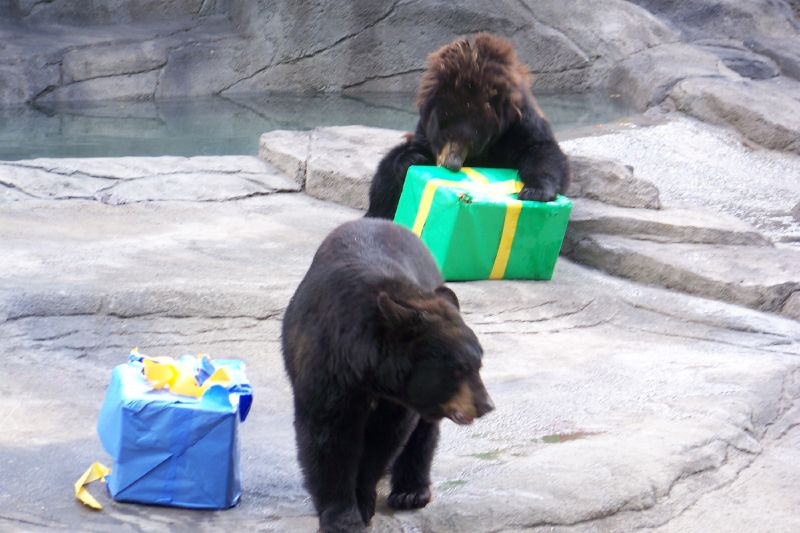 |
| Birthdays attract bears. |
To be honest, I haven't thought much about it until I was reminded of the approaching date. And then, I didn't care enough to really process the information until I sat down to write this post. Now I can't stop myself from feeling elated at the prospect of the number of years I've been on this Earth getting, well, more numerous. So it is with complete and utter childlike eagerness that I say, more numerous numbers please! May they grow and grow, until a harvest of numbers shall be laid out in a banquet of the wealth of my years, garnished with the love of those I hold dear.
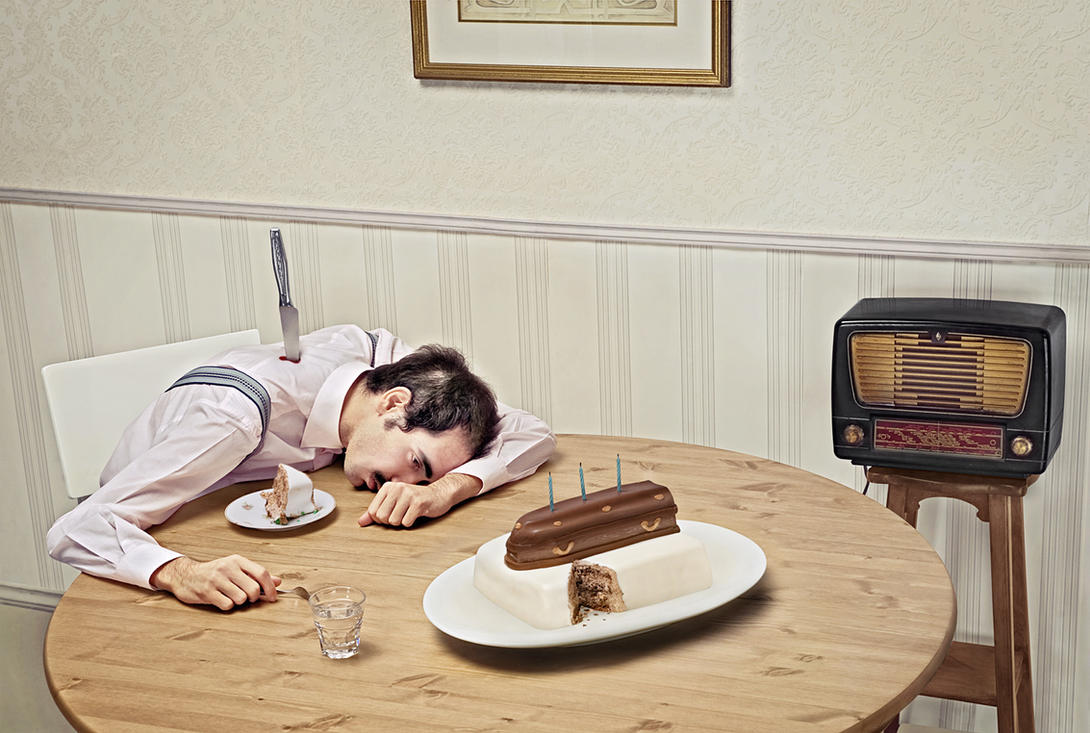 |
| If Dad tries to eat all of my cake again this year... |
Sorry about that last part. I get all sentimental when I think about not dying and instead spending the time I could have spent dead with the people in my life that I like the best. It's a simple thing, really. But often overlooked among the day-to-day. Most people dread this birthday stuff -- I used to. I never wanted to make a big deal of it, and I didn't want to remind myself that I was chipping away at my youth, just by standing back and watching the sands filter through. Age is something we can't control, and getting older is mostly terrifying. It seems almost like a punishment. Dealt to us for no apparent reason, and without just cause. What have we done to deserve these advancing years? These days, I ask the same question, but with a very different twist. What have I done to deserve another birthday?
Image credits: Top -- HAPPY BIRTHDAY, by ritchielee via flickr; Middle -- Cleveland Zoo's birthday party, by Yvonne via flickr; Bottom -- murder on birthday 3, by Murat Suyur via deviantART
Wednesday, August 21, 2013
I Used To Smile All The Time
 |
| Yesterday, I punched out a smiley face in the big pile of soap in the sink. Because everything deserves to be happy. |
Recently, my girlfriend told me to smile more. I was upset about this, because I tend to think I'm one of the happiest and most carefree people in the world. I have the history of manifesting positivity in the face of great tragedy to prove it. After I thought about it, however, I began to realize that although I think about the world now in very clear, concise modes, and although having such a clarity of perspective is inexplicably amazing, it doesn't necessarily mean that happiness will automatically follow.
I've been under a dark cloud for a long time, and my goals and my perception have been crystal clear since I was diagnosed. "I want this, this, and this," I said, as soon as I found out I had cancer. And I immediately set out to achieve those things. Some of them were easy, others of them aren't yet fully realized. I'm still hurting in certain ways after my experience, and the fact that I'm focusing on ways to fix that, instead of complaining and feeling sorry for myself is great, but it doesn't mean that it makes me happy, entirely. Because happy is an attitude, and I'm working on that. I still feel like I'm happier than the average bear, especially considering I know for a fact it's worthless to go through life being anything but. I just think I've been too concerned lately about conditional happiness. "When I get XYZ, I can finally relax..." Except that getting to XYZ is a huge journey, full of unforeseen obstacles and circumstances. And you still have to live your life while you get there. This is a pretty common attitude, and it manifests itself in several ways:
"When I get that promotion I can finally relax" -- Spoiler alert; it'll never be enough money.
"When I meet someone who makes me happy, everything will get better," -- Not necessarily; you generally need to be happy with yourself in order to attract someone in the first place.
"When I lose the extra weight, I'll be so much happier," -- I don't know, will you? You'll still be you. Be happy now, and lose the weight if you want to, not because you feel pressured to do so.
Conditions, conditions, conditions. It doesn't matter what level of priority they have in the grand scheme of things, all the way from "I'm unhappy at my job and won't be satisfied until I get a new one," and all the way to, "I'm killing my family financially post-cancer and need a book deal soon or we'll all starve." Conditions are a matter of perspective, but that's a thought for another time.
So, stop focusing on the conditional. It'll be great when it comes. But deal with your life while you have it, in the most fundamentally satisfying way possible. Because, seriously, what's the alternative?
Friday, August 9, 2013
I Wrote My Will at 26: Part 3, Health and Finance

I felt
selfish for writing my letter, and sending it out to close friends I knew would
follow through on my wishes. I only
asked that my family be looked after when I was gone. Most of the guilt came from the fact that I
hadn't really been able to look after them myself yet. My family had always looked after me, and
supported me monetarily when the occasion called for it. After my first year in NYC, I began to gain
financial independence. I worked in
project management and brought home a decent salary. But I was a contracted employee, and
eventually my contract ended. It wasn't
long before I was on my own again, with a dwindling savings account in a city
that's prohibitively expensive. I spent
a few months toying with the idea of writing for a living, and I even worked on
a book project. The money was going
fast, and I was only able to work a few days on another project. It was at that point I noticed that something
was wrong, and a cancer diagnosis promptly followed. I didn't have much of an opportunity to pick
myself back up after that. It was on to
surgery and immunotherapy instead. I
didn't fully know it yet, but my working days would be over for a while.
I
wondered if I'd actually done something wrong.
If I'd made a mistake and hadn't prepared to the best of my ability,
even though I could never have predicted what happened. All the same, I began to wonder what I should
have had in place at that point, in order to protect myself against unexpected
hardship. To answer that question, I
spoke with Bryan Mills, a financial consultant with Investors Capital.
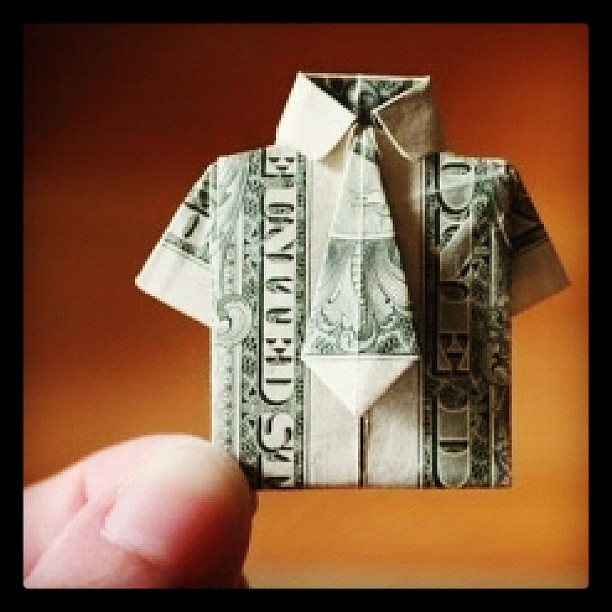 |
| "I'm not made of money, but my clothes are" |
"One
of the biggest things I always ask someone I speak to is, do you have six
months of living expenses in the bank?
Six to twelve of months of real cash.
Whatever your monthly expenses are, you have to be able to cover at
least six months." It's no secret
that the average person needs to be saving, in order to cover their bases. But how do you go about this? "Write down what's called a
T-Chart," says Mills. "Income
on the right side, outflow on the left.
Write down every single expense: food, bills, car, gas, insurance,
travel. Go through line by line and see
if there are things you can cut if you need to."
Seems
simple enough. But what about when
something serious happens? What can the
average person do to protect themselves in case of an unexpected health
crisis? "Level premium term life
insurance is important for everyone to have," says Mills. "You can usually get it dirt cheap. The average cost of a funeral today is over
$10,000. A 20-30 year term policy is
relatively easy to qualify for and would cover the expense, instead of leaving
your family to pay out of pocket."
Age and health are a factor though, and policies will cost you more as
you get older. "Most people think
they're safe. 'My company is going to
give me all this insurance,' they think.
But what happens if you leave the company? Most group insurance isn't portable. Personal insurance is the best way to make
sure you're covered. And it has to be
through a company with a superior credit rating, otherwise they might not be
able to make good on their obligations in a really bad situation."
What if
you're just starting out in life? And
you can't afford a term policy, even though Bryan would argue that a lot of
them are very affordable, there are still instances in which any expenditure
seems like too much.
"Budget
yourself," says Mills. "Don't
spend wildly or erratically. You can
treat yourself, but really be conscious about what you're spending. There are apps that can help you."
Apps! Apps!
Of course! As a millennial, born
into an era of increasing technological dependence, I was very happy to hear
that. In my day-to-day adventuring, I
use a host of apps to make life easier, to entertain myself, and to annoy as
many people as possible. And so I
figured that being a financial consultant, Bryan would have the skinny on the
best gadgets in the financial field.
Turns out, he does. So what are
these magnificent software-laden golden geese?
Bryan gives us the rundown:
From the
glorious minds behind Mint.com, the app version of the site provides all of
your financial needs at the tips of your fingers (or thumbs). It tracks your spending habits and cash flow,
and creates a personalized budget based on your needs. Just add your banks and credit cards, and
watch your custom graphs load up and head deep into the red (oh, that doesn't
happen to everyone?).
Run by the Life and Health Insurance
Foundation for Education, a nonprofit that helps people find the insurance
that's right for them. They offer options based on your current needs,
providing various calculator and estimator tools to help you figure out what
kind of coverage you require. They have an Iphone app, and a website with
resources for consumers and advisers alike.
This is
Bryan's very own app. "For someone
who just started a job or is new to the workforce, it'll help you plan for the
future," he explains. His goal is
to get you from here to a healthy retirement, without pushing expensive
products down your throat. The app is
completely unbiased, and comes with two categories: "Retire Logix,"
for those looking to plan for the long-term, and "Student Logix,"
designed specifically for the academics among us. Anytime you feel like talking to Bryan in
more detail, click on "Consult with Bryan?" and you can dial him up or
send him an email. I personally send him
life-sized cardboard cutouts of my face, but he tells me that emails work just
as well. Retire Logix was rated among
the top 100 apps of 2011 by Money Magazine.
It turns
out there are options for protecting yourself financially in a crisis. Granted, it's very difficult to manage, and
no one knows this better than myself.
But I'm trying my best to get back on my feet, and if you're looking to
do so as well, I hope this information will be of use.
Image Credits: Top -- Pumice on 20 dollars, by Robert DuHamel via Wikimedia Commons; Middle -- I'm not made of money, but my clothes are, by Craighton Miller via flickr; Bottom -- I am PRETTY give me MONEY, by dtchn via deviantart
Disclosure:
I wrote this article myself, and it expresses my own opinions. I am not
receiving compensation for it. Bryan E.
Mills is a financial consultant who offers securities through Investors Capital
Corporation. Member FINRA/SIPC. 800-949-1422.
The views and opinions offered by Bryan Mills in this piece should not
be construed as specific investment advice.
You should consult an investment professional regarding your unique
situation.
Wednesday, July 24, 2013
I Wrote My Will at 26: Part 2, Health Troubles and the Law
If you're thinking of putting your own last wishes into writing, or even leaving a crummy bag of sand behind for your loved ones to sift through, there are a few things you should know. First off, I didn't have a legal bone in my body back then, and at this point the makeup of my bones is still pretty ambiguous, so please don't take this as a substitute for legal advice; it's a series of guidelines I've come by through my own experience with end-of-life matters. If you have legitimate concerns, be sure to talk to an attorney.
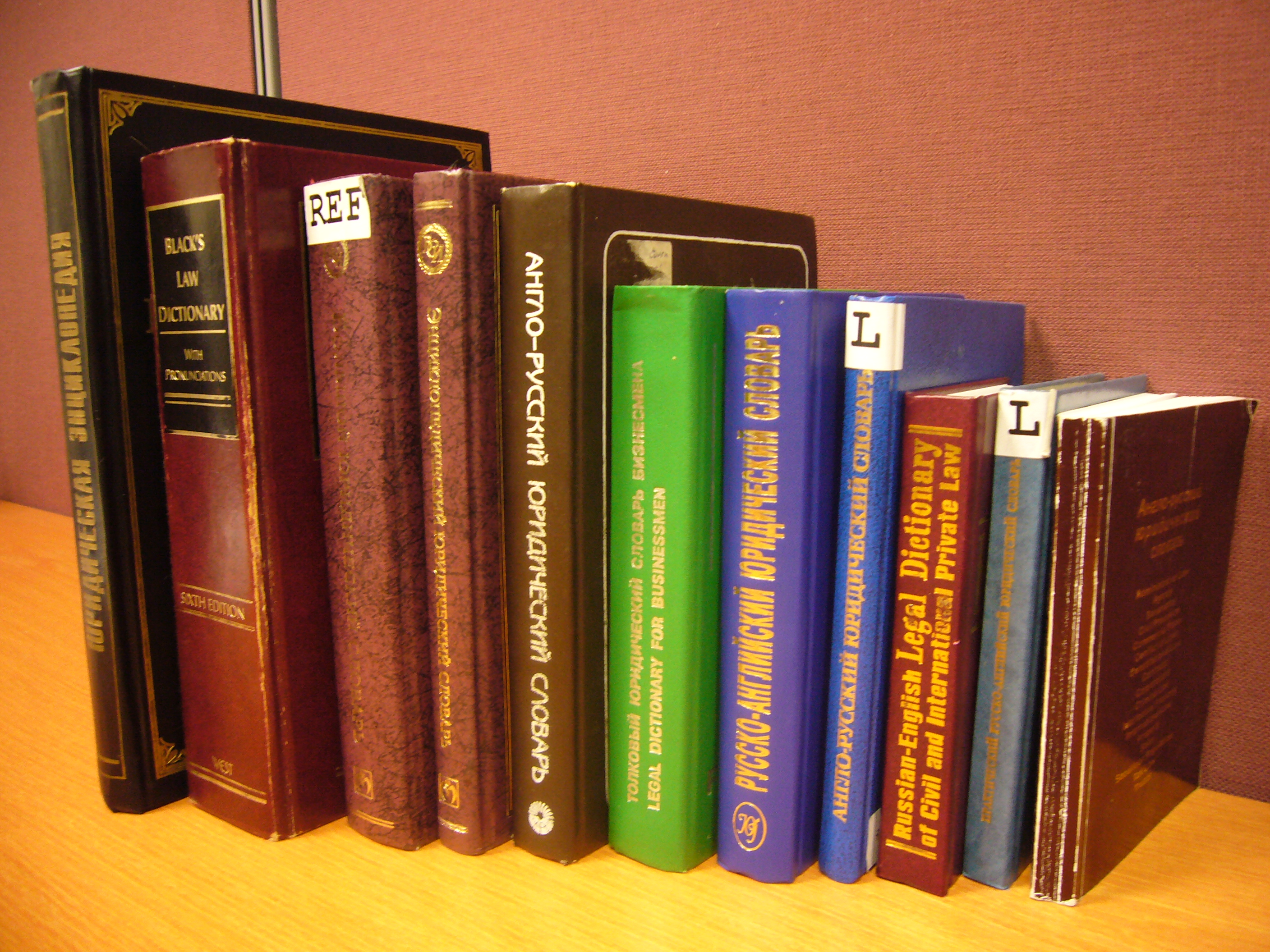 |
| Or maybe become an attorney yourself. You can start by reading all of these highly entertaining tomes. Credit: Leonid Dzhepko, Legal Translator |
And if you don't have time to go to law school, you can try some practical solutions instead. Turns out there are things that everyone can, and should, do, without shelling out extravagant legal fees and bankrupting themselves even further in the midst of a crisis. It's important to be aware of your options, so that if you need to, you can get your affairs in order quickly and efficiently. Recently, I sat down with Peter Ollen, attorney and owner at OllenLegal.com, and he told me just how to do that.
"The most important thing," he says, is to "have a properly executed will, witnessed and notarized. And make sure it's retrievable." This is the ideal scenario. It seems simple, but an an ABC poll from last August suggests that only half of all people have a will. A 2011 article from Business Insider puts the number of people without a will closer to 60%. And the percentage of young adults under thirty who haven't penned their last wishes is reported to be 92%. Very basically, you need to have everything you want or need written out in detail, make sure it's legally binding, and know where to find it. "If not," Ollen says, "There's a default pecking order. Absent of a will, spouse or parents make your decisions." There are also taxes involved with death, and you have to make sure all those pesky bills are paid, otherwise loved ones may get stuck with them.
But what if you're young, like say, my age, and something happens to you, similar to what I went through? How do you have your affairs together then, when you've barely started out in life? "There are resources online," says Ollen. "You can buy forms from LegalZoom.com, for instance, that are guaranteed resources. You can also reach out to your state bar association; they have pro bono and basic guidance available for these situations. If you don't have the resources to get an attorney, reach out to LegalZoom or other document depos. They can offer guidance and the state bar may be able to fill out the forms for you. And, if you're worried about your time or escalating situation, give someone power of attorney so they can handle all this for you, while you focus on the bigger issues."
 |
| These guys know what's up. Credit: Daniel Schwen |
You can't always think clearly in the midst of a health crisis. I know I couldn't. So it's a good idea to get things squared away before you ever get into one. If you're getting to the point where it's difficult to juggle, Ollen suggests that you assign someone power of attorney. Make sure it's someone you trust, like a family member or spouse. They'll handle all the legal decisions for you, while you focus on what's really important -- your health.
I didn't have a will going into my cancer diagnosis, or a power of attorney. I ended up writing a letter that I would have tried to pass off as a will had things gone awry. But simply having something in writing isn't enough. Unless, like me, the point of leaving something behind was more for the message you planned to send your family and friends, than it was for the material goods and wealth. Even so, what little you have to give could inspire debate among your loved ones, and even turmoil. Any amount of stressing over who gets what in a time of loss can trigger intense emotional reactions. It's better to be safe and settled, than not have a plan at all.
Tuesday, July 16, 2013
I Wrote My Will at 26
 |
| "And my collection of geographically accurate boogers goes to..." |
I wrote my will at the age of 26. It's infused with comedic zingers, and is in no way legal -- but hey, it's a will, nonetheless.
During the period leading up to my second surgery, after I was diagnosed with cancer at 25, I wrote what would become a symbolic offering of what little I had in those days. I wanted to have something in writing that would tie up all the loose ends in my young life. Turns out, having lived only a quarter of a century, there weren't very many loose ends to worry about. Though I'd heard that it's better to have something in writing than to check out without making any kind of arrangements. Turns out that isn't entirely accurate, but I didn't know that at the time. So I drafted this letter. No one knows that I did this, not even my family.
At the time, I was doing a lot of sitting around and feeling sorry for myself. I laid on the couch at my parents' townhouse, watching TV, curled up under a snuggie, slowly losing the ability to cope with my evolving circumstances. Mostly though, I was feeling sorry that I had to leave my family, and that I had nothing to offer that would soften the blow. The thought of dying so early, loved ones gathered around to bury me, their faces twisted in mourning, was too much to bear. It spawned thoughts of my parents splitting up, my sister's new marriage falling apart, and all three of them slipping further into the depths of grief, never to return. And all that would be my fault. I would be the cause of so much suffering for the people I cared about most.
My parents were getting older, and money was getting tighter and tighter. My sister had gotten married during the summer, two months before I was diagnosed with cancer. Mom and Dad paid for the majority of the wedding. Shortly after, they'd sold my childhood home and bought a townhouse an hour up the road in State College, PA. In doing so, they signed on to another mortgage, late in life, against their better judgment. None of this would've been a problem, had I not shattered the illusion of youthful permanence and gotten myself all genetically mutated.
 |
| "There's a pen growing out of your brain, just like this." Source: National Cancer Institute |
The day of my first surgery was the day my parents closed on the new townhouse. I sat in the office with them, that morning, listening to small talk thrown out by the lawyer and the real estate agent, all the while doing my best to remember that life hadn't stopped for them as it had for me, and they didn't have any idea that directly following this appointment I was hopping in the car with my family and traveling three hours to Pittsburgh to go under the knife for the first time in my life.
I also knew that this was cancer, and that it could very well be terminal. That thought never left my mind. I wanted to reach over to the console and hit the reset button like I'd done so many times as a child, sitting cross-legged in front of the TV in the basement, controller and princess-saving aspirations in hand. But there was no reset button in my case. I would be forced to deal with whatever came next, no matter how horrible.
.jpg) |
| Now that I think of it, Kirby kinda looks like a tumor... Source: Andrew Evans |
The possibility that I wouldn't make it loomed over the car on our drive to Pittsburgh like a dark cloud, hovering like a silent threat. For a long while, I was able to stare right back into its core, challenging its authority over me. Clouds like that cut through to your soul, and wear down your courage over time, until you begin to see the world, and the possible end of yours, in a more practical light. "Well," you eventually say, stealing a glance at the blackening sky, "Maybe now it's time to prepare for the worst."
I wanted to provide for my family, but at the age of 26, I had nothing to provide. And I realized how sad it was that I had to write a will with no real "willing" involved at all. The only thing of real value I could give away were the emotions I felt for the people who would read it after I was gone, and I spread them liberally throughout. I needed to make sure they all knew how I felt. And if I couldn't give them anything of material value, I would leave my family and friends with a message of undying love. I didn't want to leave my family without giving them something in return. They had given me so much already. Thoughts of Indiana Jones and the Temple of Doom ran through my mind, and the introductory scene where Harrison Ford is stealing a jewel and replacing it with a bag of sand to avoid setting off the trap. My family had handed me a great jewel -- a lifetime of opportunities, love, and support, and I had only this crummy bag of sand to offer in return. It didn't work in the movie, I thought, and it won't work now.
My 26th birthday was spent hobbling over to my sister's house for dinner, ice cream cake, and presents. I was still healing from that first surgery, which was actually a two-fer that included separate procedures. It was a combo situation like you find at family restaurants.
Me: "I'll have surgical combo A, please."
Waitress: "Would you like that with or without post-surgical bruising?"
Me: "Oh, I don't know. What do you recommend?"
Waitress: "I recommend the bruising. You won't be able to sit down practically anywhere, and you'll break the towel rack in your sister's house the first time you have to poop."
Me: "Interesting. I guess I'll give it a go."
Waitress: "Excellent choice. And how about a side of surgical drains?"
Me: "Hmm... I might pass on those this time."
Waitress: "Sounds good. You make sure to try them next time."
Me: "Thanks, I'll keep the drains in mind."
Waitress: "I'll be right back with your IV and a pre-op syringe. You'll be seeing pelicans and singing obnoxiously in the key of F in no time."
Me: "Can't wait."
 |
| "I'd like to avoid the anal leakage, if possible." Source: Alan Light |
I was uber sensitive to the situation in which I found myself. I had just gotten through my first set of procedures to remove lethal cancer from my body. I was just 26. Though I'd dated a lot, I'd only had a few real adult relationships, I'd only had one real job of any import, I'd never made a splash, and at this point it was possible that I never would. I had nothing to leave behind; I had no legacy. My whole life, I'd wanted to be a writer. I hadn't done much to pursue that goal, but I began to write a memoir about my experience with cancer. And then I wrote a will. I decided that I could write at least that much. It was possible that I'd be dead, and the memoir would never be finished. This will, or letter, would be my legacy.
And so I wrote the letter that would become my will, in the hopes that someone would take pity on me and see that my family survived the worst case scenario. Because, at the age of 26, without any real prospects, pity was all I had. Which lead me to thinking, "What should I have had at this point?"
I'll be answering that question in a series of posts that I hope will help shed some light on how easy it is to be prepared for life's worst case scenarios. In Part 2, we'll talk about the legal issues associated with end-of-life situations, as well as what the average, healthy person should have in place.
Wednesday, July 10, 2013
How Far Have You Come?
The Allegory of the Winding Road

Life moves in curves, and currents. There are corners to be strolled or cut, and obstacles to be leaped or removed. The path winds down through the years with unyielding certainty -- the certainty is that the bends in this road will never stop. How far have you come, through the winding pathways of life?
Personally, I've gotten to a place in my life I never thought I'd be again. Not ever. I stumbled through violent switchbacks in recent years, only to come out in a place where I figured the road only lead in one direction, and that I would just have to deal with it. But I was wrong. There I was, finding myself rummaging through memories of when things were different, holding dear to my heart a spark of something I imagined I'd never see again. I thought I would never hold a job again, or have a savings account again, or live in the places I wanted to live. Mundane things mostly, but when you take them all under consideration, you find out that what you really believe is that there's no chance for you to lead a normal life. I thought I was banned from a normal life, resigned to standing outside the gates, fingers wrapped around the bars, peering in at others going about their business, taking it all for granted. And looking in at all the scurrying bodies and blurred faces, continuing on down the road to their own likely destinations, I was reminded of the other things I wouldn't have -- the things that hurt the most. I thought I'd never love again, or be loved. I wasn't worthy of anyone's love, sometimes not even my own. And that I'd never have a family, or live with someone, or buy a house, and have children. For a long while I thought that was okay, and it was just the cards I'd been dealt. I would live with my revelations and move on.
But your circumstances, or the events in your life, or the setbacks you feel so deeply, do not define the course of your happiness. At any point in time, you can walk around another bend, and suddenly find exactly what you've been looking for. That doesn't mean you have to wait around for it, trotting silently into the dusk with no direction. Although unfortunately, most tragedy brings to mind a sense of helplessness, and a feeling that it would be entirely impossible to so much as grasp at the things you once wanted most. Even tragedy is not as strong as the continuing whims of a road that winds down through time, ready and ever willing to heal, to encourage, to mend hearts and minds, to entwine lives and further goals, and most of all, to plant love in all directions, waiting for you to stumble onto it.
Thursday, July 4, 2013
My Independence Day

Happy Fourth of July! Happy Independence Day! Happy Will Smith movie marathon day!
As with most July 4th holidays, images of barbecues, fireworks, and fireflies are running through my mind. I remember one year, lighting snakes outside my childhood home for hours, and being told not to run with sparklers. I ran with them anyway, because the patterns they burned into your retinas after being waved haphazardly through the air were worth the risk of second-degree burns. Maybe you disagree, but as a ten-year-old, I liked to live on the edge. When no one was looking, I sometimes ran with scissors, too.
Another year, visiting family out of state, my uncle decided to entertain us with his own fireworks display, using what I can only estimate to have been military-grade explosives, and ended up blowing a decently sized crater in the end of his driveway.
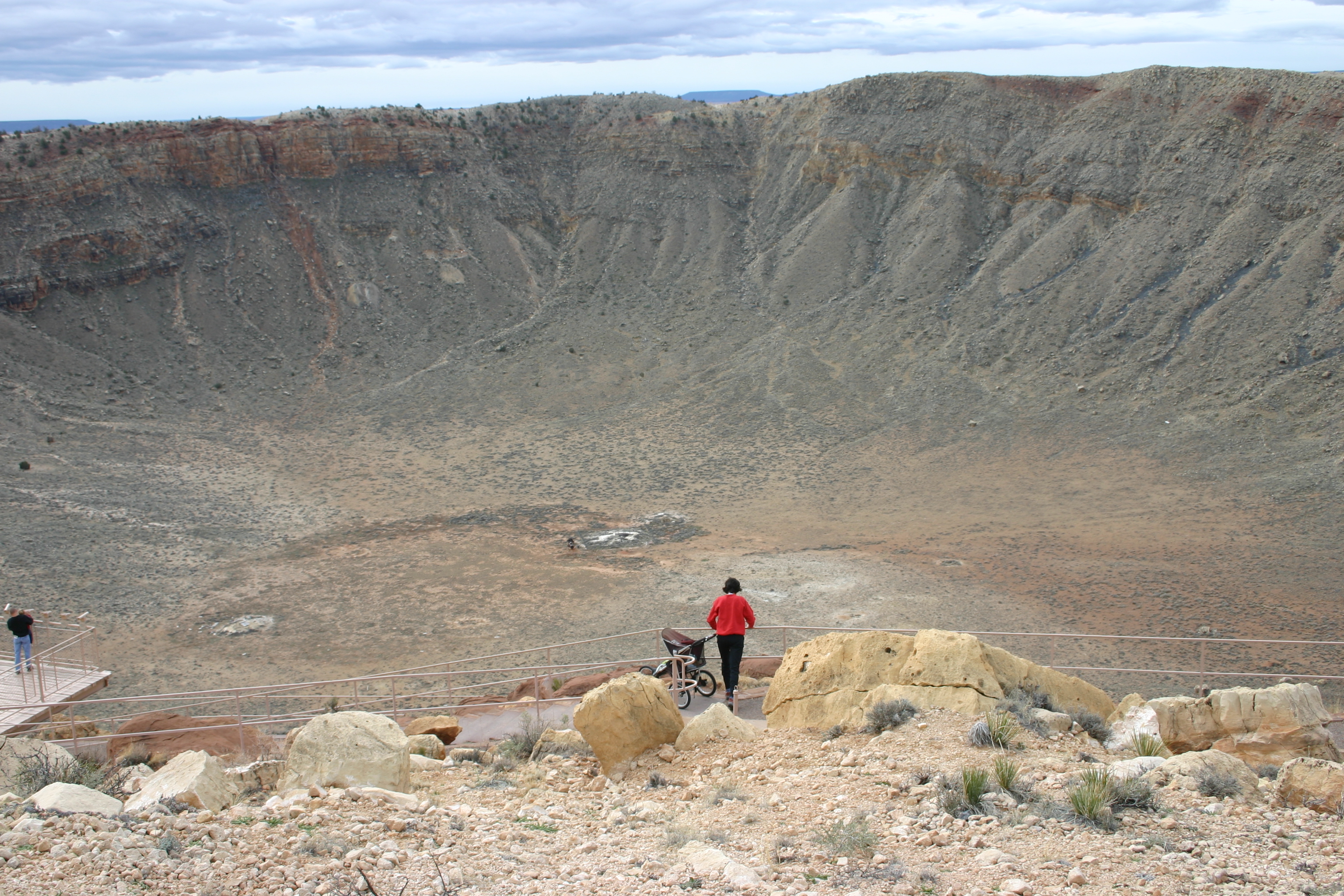
The last few years, I'd been going to see the fireworks display in State College, Pa, which is extraordinarily beautiful, and timed to a score of tunes that set your heart pounding (if you could tell the difference between your heartbeats and the reverberations from the fireworks exploding through your body, that is). This year will be my first Fourth of July where independence has a particularly strong meaning in my life, and I intend to spend it with someone who embodies my hope for the future, in an adventure to upstate New York. In a break of tradition, I'll forge a new association with Independence Day in my mind, and create a new standard of living for myself without the threat of terminal illness hovering over my head.
Because, you see, I have this keychain. On the front of the keychain, my initials are engraved in large capital letters. And on the reverse side is a date with a ribbon. The date is 12-1-12. My parents bought me this keychain and handed it to me the day after I was finished with treatment for stage 3 melanoma. That day was December 1st, 2012. Now, for some reason, the coming of Independence Day this year has triggered that memory in my mind. It's made me recall how I felt when I was finally done with immunotherapy -- the relief, the uncertainty, the conquest, the hope, and all the whirlwind emotional static that clung to my neural pathways and wouldn't let go.
Today, Independence Day means something more for me. It's an independence from cancer. It's a day I can celebrate and remember the time I was handed a keychain, and told that I had earned my independence, if not only for a short time. Because I was lucky enough to have gotten through my ordeal, that doesn't mean that it'll never threaten my life again. It means that I now have the opportunity to appreciate my independence from tragedy with every new breath, and every sunrise.
Feeling independent from political tyranny suffered two hundred years ago is one thing, and celebrating the birth of a nation is a worthy cause that should never be taken for granted. But there are other things that are important to feel independent from: things in life that are just as tyrannical as an oppressive colonial-era government, if not more. I've told you what I feel independence from, and that gives me hope for the future. Not to live a life for a certain amount of years, but to live with a certain amount of fulfillment. To be able to fully enjoy my time independent from the terrible disease that haunted me in the past. And I know that it may come back some day, but for now, I'm going to enjoy my independence. I hope that even if it were to return, I'll still maintain some small wisp of this same attitude, whenever I flip over the keychain that my parents handed to me, and gaze at the date when I truly gained my independence, and for the first time really understood what it meant to do so.

What's your Independence Day, if you have one? And, if not, what is it you wish you were independent from, and how can you make this happen?
Tuesday, July 2, 2013
"Natural" Healing, "Alternative" Medicine
I'm getting increasingly tired of the number of "Natural" and "Alternative" health accounts I've accidentally followed on Twitter. You guys are crafty. You do your best not to look crazy right away, and present yourselves in a medically authoritative way. Seems like that's working for you. But then I start to see the kind of articles you post, and I realize I've been taken in. You post things on Twitter with titles like: "(Rare bit of foliage) will make every aspect of your life better!" or, "Now, rub potato skin on your genitals to make women want you!" and, "XYZ will treat cancer, heart disease, diabetes, MS, lupus, the common cold, stretch marks, a stubbed toe, pinkeye, indigestion, testicular chafing, and having no one in your life who loves you."
Or, my favorite: "A new study has shown that mainstream medicine is a conspiracy, and the only substance of any actual medicinal value is a smoothie made with sloth toenails." Just what studies you pull from, the world will never know, because you never, ever, cite them. And when you do, they're not in English, and are written by people who are not medical professionals. In the last article I read, the author actually thought it appropriate to cite "anecdotal evidence" as source material. As in, "So-and-so said he felt much better after taking the pills made of dragon spines, and everyone in his life noticed how happy he appeared at the pancake breakfasts. He is still very much dead, but the dragon spine pills totally work. Please buy them."
I keep following you until I get just disgusted enough to leave your nonsense behind. Because I truly believe that it's better to be aware that you're out there, spreading fear-mongering sensationalism to line your pockets, so the intelligent human beings among us can be prepared to deal with you. Even so, after about halfway through most articles, I click "unfollow" on whoever posted that particular batch of pseudoscience.
Articles about alternative medicine are usually written by people who haven't responded well to their own diagnosis, or people who have absolutely no idea about the true horrors of facing a health crisis. The former usually have bios like: "Karen Ladypants was diagnosed with an incurable terminal illness, but cured herself by eating a steady diet of whale placenta." No, Karen, you didn't -- and fuck you for misleading people. The latter bios often contain more acceptable information, and belong to people who have become invested in the epidemic of the American food industry, and go something like this: "Lulu Treebeard discovered in 2009, that everything you come into contact with in daily life is made from synthetic chemicals supplied by greedy corporations that pushed the Lorax into retirement. She has adopted some fringe beliefs and now dedicates her time to promoting a healthy lifestyle, along with her husband and one very socially awkward son."
Let's be fair; there's nothing wrong with promoting a healthy lifestyle. There isn't even a whole lot wrong with denial. Promoting a healthy lifestyle is exactly what this author aims to do. But I like facts, and because of that, you won't find me buying into anything for which there's no evidence of any benefit. There is something wrong with pushing things that have no medicinal value, and that are occasionally dangerous or that cause the opposite of the desired effect. I also consider it unethical to promote a product that has no known benefit, even if it isn't physically dangerous. Because, in doing so, you are manipulating consumer fears to make yourself richer. All of the darkest corners of economics can be found in the neighborhood of healthcare.
In terms of denial, or not fully adjusting to the new normative state you've entered through a tragic diagnosis or other event, I should first say that I completely understand. I lived an entire year of my life curled up on the couch under a snuggie. You want terrible things to go away, and you deal with that desire for a clean slate however you see fit. But dealing with your own fears is one thing, playing on others' fears to validate your own denial is quite another.
This is what bothers me the most about the community to which I now belong. In the midst of tragedy, you have a tremendous opportunity to help people. In order to do so, you must have the courage to face the realities of your circumstances. Cancer is incurable. Science can't do it, the turnips in your backyard won't do it, either. Man up, use the wisdom you've gathered from staring down the gates to the other side and make the world better. Instead, these alternative health folks choose to increase the amount of suffering in the world by pushing placebos, or dangerous, ineffective treatments.
If it isn't proven to be effective, peer-reviewed, overseen by governing bodies, results recreated and independently verified, if there aren't statistics and survival rates and facts and figures, then you are doing something to your body and no one can predict the results. Seek out alternative treatments only in conjunction with a conventional treatment regimen, and only if those particular alternatives have proven clinical benefits.
Or, my favorite: "A new study has shown that mainstream medicine is a conspiracy, and the only substance of any actual medicinal value is a smoothie made with sloth toenails." Just what studies you pull from, the world will never know, because you never, ever, cite them. And when you do, they're not in English, and are written by people who are not medical professionals. In the last article I read, the author actually thought it appropriate to cite "anecdotal evidence" as source material. As in, "So-and-so said he felt much better after taking the pills made of dragon spines, and everyone in his life noticed how happy he appeared at the pancake breakfasts. He is still very much dead, but the dragon spine pills totally work. Please buy them."
I keep following you until I get just disgusted enough to leave your nonsense behind. Because I truly believe that it's better to be aware that you're out there, spreading fear-mongering sensationalism to line your pockets, so the intelligent human beings among us can be prepared to deal with you. Even so, after about halfway through most articles, I click "unfollow" on whoever posted that particular batch of pseudoscience.
Articles about alternative medicine are usually written by people who haven't responded well to their own diagnosis, or people who have absolutely no idea about the true horrors of facing a health crisis. The former usually have bios like: "Karen Ladypants was diagnosed with an incurable terminal illness, but cured herself by eating a steady diet of whale placenta." No, Karen, you didn't -- and fuck you for misleading people. The latter bios often contain more acceptable information, and belong to people who have become invested in the epidemic of the American food industry, and go something like this: "Lulu Treebeard discovered in 2009, that everything you come into contact with in daily life is made from synthetic chemicals supplied by greedy corporations that pushed the Lorax into retirement. She has adopted some fringe beliefs and now dedicates her time to promoting a healthy lifestyle, along with her husband and one very socially awkward son."
Let's be fair; there's nothing wrong with promoting a healthy lifestyle. There isn't even a whole lot wrong with denial. Promoting a healthy lifestyle is exactly what this author aims to do. But I like facts, and because of that, you won't find me buying into anything for which there's no evidence of any benefit. There is something wrong with pushing things that have no medicinal value, and that are occasionally dangerous or that cause the opposite of the desired effect. I also consider it unethical to promote a product that has no known benefit, even if it isn't physically dangerous. Because, in doing so, you are manipulating consumer fears to make yourself richer. All of the darkest corners of economics can be found in the neighborhood of healthcare.
In terms of denial, or not fully adjusting to the new normative state you've entered through a tragic diagnosis or other event, I should first say that I completely understand. I lived an entire year of my life curled up on the couch under a snuggie. You want terrible things to go away, and you deal with that desire for a clean slate however you see fit. But dealing with your own fears is one thing, playing on others' fears to validate your own denial is quite another.
This is what bothers me the most about the community to which I now belong. In the midst of tragedy, you have a tremendous opportunity to help people. In order to do so, you must have the courage to face the realities of your circumstances. Cancer is incurable. Science can't do it, the turnips in your backyard won't do it, either. Man up, use the wisdom you've gathered from staring down the gates to the other side and make the world better. Instead, these alternative health folks choose to increase the amount of suffering in the world by pushing placebos, or dangerous, ineffective treatments.
If it isn't proven to be effective, peer-reviewed, overseen by governing bodies, results recreated and independently verified, if there aren't statistics and survival rates and facts and figures, then you are doing something to your body and no one can predict the results. Seek out alternative treatments only in conjunction with a conventional treatment regimen, and only if those particular alternatives have proven clinical benefits.
Tuesday, June 25, 2013
Cancer Crazies
I've been lucky enough so far to avoid the cancer crazies. I feel extremely fortunate that this has been the case. If ever confronted by such a person, I'm not entirely convinced I'd be able to remain civil.
Cancer is a series of genetic or epigenetic malfunctions. It's not a spiritual or emotional disorder. You don't get cancer because you're a bad person, or because you've built up too much karmic debt, or because you slept with your best friend's aunt's room mate's boa constrictor. And stress may certainly be a factor in lowering immune response and aiding in the progression of disease, but negative thoughts alone, launched out into the cosmos, are not going to be flung back to you a hundredfold by an advanced race of ancient aliens with a bizarrely vindictive agenda. I almost promise. Besides, they're too busy experimenting on my reproductive organs as I type this. Did I say organs? Plural? Yes, I've been enhanced. By aliens.
There is also no cure for cancer. This is terrifying, and a lot of folks can't handle information like that, even if they've never experienced the disease personally. Death anxiety inspires a lot of funky behavior, including the urge to make shit up for no reason, as well as the urge to be taken in by said made up shit.
Logic, please. Cancer sucks enough as it is. Survivors feel bad enough already, and they could do without you berating them for not drinking your potion made of camel jizz.
 |
| Source: Whitemans Wildlife Park, Perth, Australia |
Friday, June 21, 2013
Extreme Harmony
I want so much to forget all of this. I want that more than anything. But I know that if I did; if I were to put this all behind me and live as if it never happened, it would be the single most selfish act of my entire life. Just because I was lucky enough to have survived, that doesn't mean I can ever walk away.
Writing about my experience with cancer brings back painful memories with every word. Engaging in the cancer community, and finding all of these wonderful people whose lives have been touched by the disease is both a blessing and a curse. It brings me closer to all of you, knowing that we have this shared experience. And it brings me closer to humanity, knowing that such suffering isn't only possible, but commonplace in the world. It identifies and exposes the human condition in greater detail than anything else could.
This is what inspires me to act -- the fact that everyone goes through something, which is an important thing to be mindful of in the first place, but even more so when you've just been through something pretty terrible yourself. You have the option to step back into the mainstream, that winding and disorienting wormhole of people and energy shooting off ceaselessly into the future, back into the routine, into the grind, the rat race, the series of events and reactions and self-decrees that we call everyday life. It certainly takes a while to get back to that place, back to "normal," or what was once normal for you, but I'm finding out that it's entirely possible. When I talked to people while I was going through treatment, people who were a few years out who had already been through the same ordeal and had left most of the pain behind them, I was exposed for the first time to individuals who had regained normalcy in their lives. I couldn't, for the life of me, understand how they'd done this. It was such a foreign concept to me. And I wasn't even happy for them. In fact, I was irritated. I thought about my feelings, and how I'd been so miserable, so life-alteringly miserable, and knew in my heart that I'd never be where they were. I'd never be satisfied again, and I'd certainly never be able to hold a job again or have successful and fulfilling relationships, not with the dark cloud of what had happened following overhead. Those thoughts seem so far away now. I've been reintroduced to levels of normal in my life that I never thought I'd see again. And I've also realized that it's okay to embrace them. It's okay to allow myself to be happy. I don't have to take the whole weight of cancer on my shoulders, all by myself. I can do my thing and help, and I can also be happy.
But that's just it; I have to help. I can't sit by while others are dealing with this and worse, and allow it to continue without putting up a serious fight. Which brings me to option number two. Option two is where I was, sitting alone in my room, writing up a storm about my experience, all nicely packaged together in book form (which will hopefully be seeing the light of day soon), that I would use to garner awareness and attention, and build a platform from which I could enact change and better the circumstances of those who were not as fortunate as myself. There are some people in this world who have no advocates, and who are lost, and who have no hope. This is unacceptable to me. I was going to fix it.
I still am. And I would be extremely pissed at myself if I didn't follow through here. The need to do so outweighs any threatening complacency a million fold, so I don't really have a lot to worry about. I don't have to hole up anywhere and work myself to the bone, focusing on nothing but the misery and the task at hand. There is, I'm finding, a third option: a Middle Way. And that is, as I touched on earlier, that I can focus my energy on enacting change and bettering the world, and find personal happiness and fulfillment at the same time. I want others who are going through this and don't even remotely understand what it means to accept "normalcy" again, to know that it's okay to learn to be happy again. It's okay to be happy. You'll find happiness in old things in different ways. And it's okay to embrace that. It's okay to own your new life. You have passed through a checkpoint, a weigh station, and you've seen things others never will, and that has shaken you to your core and caused you to reevaluate and reconsider just about everything you've ever experienced. But there are some experiences that will still translate, and that will be all the same, or even enhanced by this. And they are...
Love. Self-worth. Fulfillment. Happiness.
If you're anything like me, you'll isolate yourself from the possibility of ever finding these things again. I had resigned myself to being miserable, although I would have argued that I was steeling myself and making the necessary sacrifices to meet my goals. I now know that it was unreasonable to put myself through all that I did, but, I needed it at the time, and it was useful to my growth, and I wouldn't trade that time for the world. I got a lot of work done, both tangible and intangible. It was a time of significant development and the beginning of a gradual process of healing. I'm proud of myself for having such discipline and fortitude at a point when I needed it most. This is not to say that I immediately took to my self-care responsibilities right away, or with any sense of ease whatsoever. In reality, I spent the good part of a year curled up on the couch, covered in a snuggie. But that was part of my process. If you happen to process tragedy that way, curled up under a snuggie, then that's okay. I went from severe "handling" mode, to severe couch mode, in the span of a few months. I shut down because I couldn't filter all the terrible information that was running through my head, like the vile tributaries of a vast and poisonous river.
It's okay to come to terms with all that, and the fact that you've gone through it. And the fact that you are or will some day come out on the other side. Being happy or accepting happiness is not a denial that something awful has happened to you -- quite the contrary, I'm finding out. It's an acknowledgment of the experience, and a nod to your new-found perspective. Life is short enough as it is; we should embrace all the love, self-worth, fulfillment, and happiness that we can. You might stumble around aimlessly until you find it, like I did, or you might suddenly get back on your feet and know exactly where to look for it. In truth, there's no right answer, and no guidebook for finding happiness after a tragedy. Normalcy is a lie ordinarily -- it doesn't exist -- and even more so after you have your life threatened. Normalcy is a quest, more than it is a concrete state of things.
Writing about my experience with cancer brings back painful memories with every word. Engaging in the cancer community, and finding all of these wonderful people whose lives have been touched by the disease is both a blessing and a curse. It brings me closer to all of you, knowing that we have this shared experience. And it brings me closer to humanity, knowing that such suffering isn't only possible, but commonplace in the world. It identifies and exposes the human condition in greater detail than anything else could.
This is what inspires me to act -- the fact that everyone goes through something, which is an important thing to be mindful of in the first place, but even more so when you've just been through something pretty terrible yourself. You have the option to step back into the mainstream, that winding and disorienting wormhole of people and energy shooting off ceaselessly into the future, back into the routine, into the grind, the rat race, the series of events and reactions and self-decrees that we call everyday life. It certainly takes a while to get back to that place, back to "normal," or what was once normal for you, but I'm finding out that it's entirely possible. When I talked to people while I was going through treatment, people who were a few years out who had already been through the same ordeal and had left most of the pain behind them, I was exposed for the first time to individuals who had regained normalcy in their lives. I couldn't, for the life of me, understand how they'd done this. It was such a foreign concept to me. And I wasn't even happy for them. In fact, I was irritated. I thought about my feelings, and how I'd been so miserable, so life-alteringly miserable, and knew in my heart that I'd never be where they were. I'd never be satisfied again, and I'd certainly never be able to hold a job again or have successful and fulfilling relationships, not with the dark cloud of what had happened following overhead. Those thoughts seem so far away now. I've been reintroduced to levels of normal in my life that I never thought I'd see again. And I've also realized that it's okay to embrace them. It's okay to allow myself to be happy. I don't have to take the whole weight of cancer on my shoulders, all by myself. I can do my thing and help, and I can also be happy.
But that's just it; I have to help. I can't sit by while others are dealing with this and worse, and allow it to continue without putting up a serious fight. Which brings me to option number two. Option two is where I was, sitting alone in my room, writing up a storm about my experience, all nicely packaged together in book form (which will hopefully be seeing the light of day soon), that I would use to garner awareness and attention, and build a platform from which I could enact change and better the circumstances of those who were not as fortunate as myself. There are some people in this world who have no advocates, and who are lost, and who have no hope. This is unacceptable to me. I was going to fix it.
I still am. And I would be extremely pissed at myself if I didn't follow through here. The need to do so outweighs any threatening complacency a million fold, so I don't really have a lot to worry about. I don't have to hole up anywhere and work myself to the bone, focusing on nothing but the misery and the task at hand. There is, I'm finding, a third option: a Middle Way. And that is, as I touched on earlier, that I can focus my energy on enacting change and bettering the world, and find personal happiness and fulfillment at the same time. I want others who are going through this and don't even remotely understand what it means to accept "normalcy" again, to know that it's okay to learn to be happy again. It's okay to be happy. You'll find happiness in old things in different ways. And it's okay to embrace that. It's okay to own your new life. You have passed through a checkpoint, a weigh station, and you've seen things others never will, and that has shaken you to your core and caused you to reevaluate and reconsider just about everything you've ever experienced. But there are some experiences that will still translate, and that will be all the same, or even enhanced by this. And they are...
Love. Self-worth. Fulfillment. Happiness.
If you're anything like me, you'll isolate yourself from the possibility of ever finding these things again. I had resigned myself to being miserable, although I would have argued that I was steeling myself and making the necessary sacrifices to meet my goals. I now know that it was unreasonable to put myself through all that I did, but, I needed it at the time, and it was useful to my growth, and I wouldn't trade that time for the world. I got a lot of work done, both tangible and intangible. It was a time of significant development and the beginning of a gradual process of healing. I'm proud of myself for having such discipline and fortitude at a point when I needed it most. This is not to say that I immediately took to my self-care responsibilities right away, or with any sense of ease whatsoever. In reality, I spent the good part of a year curled up on the couch, covered in a snuggie. But that was part of my process. If you happen to process tragedy that way, curled up under a snuggie, then that's okay. I went from severe "handling" mode, to severe couch mode, in the span of a few months. I shut down because I couldn't filter all the terrible information that was running through my head, like the vile tributaries of a vast and poisonous river.
It's okay to come to terms with all that, and the fact that you've gone through it. And the fact that you are or will some day come out on the other side. Being happy or accepting happiness is not a denial that something awful has happened to you -- quite the contrary, I'm finding out. It's an acknowledgment of the experience, and a nod to your new-found perspective. Life is short enough as it is; we should embrace all the love, self-worth, fulfillment, and happiness that we can. You might stumble around aimlessly until you find it, like I did, or you might suddenly get back on your feet and know exactly where to look for it. In truth, there's no right answer, and no guidebook for finding happiness after a tragedy. Normalcy is a lie ordinarily -- it doesn't exist -- and even more so after you have your life threatened. Normalcy is a quest, more than it is a concrete state of things.
Thursday, June 13, 2013
I Can't Get Enough of this Water Stuff
On a night much like this, when I've once again succumbed to the numbing and emotionally murderous wrath of alcohol poisoning, I take a deep, raspy breath and think to myself...
I can't get enough of this water stuff.
Water -- it was my constant companion for over a year. In various forms, including sports drinks and uber-hydrating liquid goodness. Water. Water. Water, water, water.
I'd like to talk about this nourishing liquid as a biological necessity, and also as a symbol of the ordeal in which I found myself. And I'd like to do so in the form of a personal letter, addressed specifically to the clear, satiating beverage.
Ahem. Here I go.
Dear Water,
You have been my constant companion for over a year. And, if you want to get technical, I guess forever, too. Because I hear the majority of me is made of you. Moreover, I think that if someone were to squeeze me very hard, and diligently, a large amount of you would squirt out of me in various directions until I was the shape and consistency of a deflated inflatable tubeman. Crazy.
Anyway, thank you. Thank you for being the life-saving goodness you were evolutionarily designed to be to my corporeal body. I think that's actually repetitive, but you get the picture. Simply put, you are awesome. I drank at least sixty-four ounces of you per day for an entire year. It's odd to think about, because the average human person creature is supposed to hydrate with upwards of sixty-four ounces per day, but I don't think I have ever actually met that goal at any other point in my life. And that's because it's ridiculously hard to do. I had to force-feed (force-drink?) myself large amounts of you at a time until I thought I was going to explode, and my parents would have to mop up the bits of me that stuck to the walls and clung to those hard-to-reach corners of the house. I remember the intense subconscious paranoia of those days, and that at one point how I thought I'd actually killed myself by means of water intoxication. Did you know that if you drink too much of you, a person can actually die? I didn't, but Google made sure that I knew about it. Thanks Google, for feeding into my crazy when I needed it the least.
My year of Interferon treatments and drinking of you into my very soul was extremely rough. I can't hide that, or not admit to it anymore. I hated a lot of it. I hated you, Water. It amazes me how quickly my perception of you turned around, to be honest. How quickly I was able to say, "Well, I had enough of you times ten, but I still kind of need you to live... Well okay, you aren't so bad... Oh lordy, you taste fine... Give me some of your goodness... That's it, get in my veins."
After the Interferon treatments ended, I was sent to the hospital with intense pain, only to find out I had a kidney stone. Do you remember that? It was probably caused by the interferon, due in part to dehydration (figure that out, you liquid nightmare). And then, just when I thought you were out of my life forever (or at least until I was thirsty again), there you were -- and in large, ungodly portions once more. I stocked up on you like I was anticipating the end times. All available counter space was filled with bottles of you. Bottles and bottles and bottles and bottles. I could have kept several families alive for centuries with the amount of you I had to drink. "This will flush out your kidney stone," they said. "Just drink a lot of water," they said. "Hey," they said, "Are you drinking a lot of water?" I laughed. "Fella," I told them, all morphined up and feeling pleasantly disassociated with my circumstances, "If you knew how much water I'd been drinking, you would dig canals in me and found a city called New Venice." Needless to say, Water, my dear, you did not work very well in this particular instance. Or the original instance, now that I think about it. Otherwise, this second instance would not have been compounded upon the first. Hmm... Yeah... Water... What it is a good for?
And yet, after all of our complicated history, here you are in my hand (and mouth, and [insert part of the throat that swallows because Wikipedia is unclear about this], and stomach, and bladder) again. I can't quit you, it's just too hard. In my more vulnerable moments, I must admit that... I need you. There, I said it. Shit. Can we move on now? Can we have a normal relationship at this point? In truth, I need to know that you'll be there for me when I need you, but also that you won't smother me by means of water intoxication. Maybe what I'm saying is... I love you... but I'm not "in love" with you. Not anymore. You were there for me when I needed it, but now I need someone else. It's true -- and I'm sorry. What can I say? I'm a complex man, with a lot of layers. You really only penetrated down into one, or two, or whatever, I'm not a scientist. There's a girl now, you know, and that's going well. So I think maybe we should call it quits. Let's just have what we have, if that makes sense, and go our separate ways. It seems like your separate way involves the majority of surface area on the earth, so I doubt I'll be able to successfully avoid you for long. But, ya know, I'm glad we've been able to calm things down a bit, and I'd like to continue that trend.
Thanks Water.
Yours always (and by that I mean only when I absolutely need you),
Kevin
I can't get enough of this water stuff.
Water -- it was my constant companion for over a year. In various forms, including sports drinks and uber-hydrating liquid goodness. Water. Water. Water, water, water.
I'd like to talk about this nourishing liquid as a biological necessity, and also as a symbol of the ordeal in which I found myself. And I'd like to do so in the form of a personal letter, addressed specifically to the clear, satiating beverage.
Ahem. Here I go.
Dear Water,
You have been my constant companion for over a year. And, if you want to get technical, I guess forever, too. Because I hear the majority of me is made of you. Moreover, I think that if someone were to squeeze me very hard, and diligently, a large amount of you would squirt out of me in various directions until I was the shape and consistency of a deflated inflatable tubeman. Crazy.
Anyway, thank you. Thank you for being the life-saving goodness you were evolutionarily designed to be to my corporeal body. I think that's actually repetitive, but you get the picture. Simply put, you are awesome. I drank at least sixty-four ounces of you per day for an entire year. It's odd to think about, because the average human person creature is supposed to hydrate with upwards of sixty-four ounces per day, but I don't think I have ever actually met that goal at any other point in my life. And that's because it's ridiculously hard to do. I had to force-feed (force-drink?) myself large amounts of you at a time until I thought I was going to explode, and my parents would have to mop up the bits of me that stuck to the walls and clung to those hard-to-reach corners of the house. I remember the intense subconscious paranoia of those days, and that at one point how I thought I'd actually killed myself by means of water intoxication. Did you know that if you drink too much of you, a person can actually die? I didn't, but Google made sure that I knew about it. Thanks Google, for feeding into my crazy when I needed it the least.
My year of Interferon treatments and drinking of you into my very soul was extremely rough. I can't hide that, or not admit to it anymore. I hated a lot of it. I hated you, Water. It amazes me how quickly my perception of you turned around, to be honest. How quickly I was able to say, "Well, I had enough of you times ten, but I still kind of need you to live... Well okay, you aren't so bad... Oh lordy, you taste fine... Give me some of your goodness... That's it, get in my veins."
After the Interferon treatments ended, I was sent to the hospital with intense pain, only to find out I had a kidney stone. Do you remember that? It was probably caused by the interferon, due in part to dehydration (figure that out, you liquid nightmare). And then, just when I thought you were out of my life forever (or at least until I was thirsty again), there you were -- and in large, ungodly portions once more. I stocked up on you like I was anticipating the end times. All available counter space was filled with bottles of you. Bottles and bottles and bottles and bottles. I could have kept several families alive for centuries with the amount of you I had to drink. "This will flush out your kidney stone," they said. "Just drink a lot of water," they said. "Hey," they said, "Are you drinking a lot of water?" I laughed. "Fella," I told them, all morphined up and feeling pleasantly disassociated with my circumstances, "If you knew how much water I'd been drinking, you would dig canals in me and found a city called New Venice." Needless to say, Water, my dear, you did not work very well in this particular instance. Or the original instance, now that I think about it. Otherwise, this second instance would not have been compounded upon the first. Hmm... Yeah... Water... What it is a good for?
And yet, after all of our complicated history, here you are in my hand (and mouth, and [insert part of the throat that swallows because Wikipedia is unclear about this], and stomach, and bladder) again. I can't quit you, it's just too hard. In my more vulnerable moments, I must admit that... I need you. There, I said it. Shit. Can we move on now? Can we have a normal relationship at this point? In truth, I need to know that you'll be there for me when I need you, but also that you won't smother me by means of water intoxication. Maybe what I'm saying is... I love you... but I'm not "in love" with you. Not anymore. You were there for me when I needed it, but now I need someone else. It's true -- and I'm sorry. What can I say? I'm a complex man, with a lot of layers. You really only penetrated down into one, or two, or whatever, I'm not a scientist. There's a girl now, you know, and that's going well. So I think maybe we should call it quits. Let's just have what we have, if that makes sense, and go our separate ways. It seems like your separate way involves the majority of surface area on the earth, so I doubt I'll be able to successfully avoid you for long. But, ya know, I'm glad we've been able to calm things down a bit, and I'd like to continue that trend.
Thanks Water.
Yours always (and by that I mean only when I absolutely need you),
Kevin
Thursday, June 6, 2013
Cancer Kid: A Story of Tragedy, Upheaval, and Resilience
The new book is becoming more of a reality every day. Yesterday I had my standing appointment with my oncologist, who is featured in the book, to find out that he loved the advance copy I'd sent him. He was very excited that I'd taken the initiative to write this, and his enthusiasm about the awareness and attention I'd be garnering for the melanoma community was infectious. I felt vindicated, and relieved. All the work I've done, I thought, it means something.
Today I got through another round of edits. I have to admit, editing this book is the hardest thing in the world. It dredges up memories and images that I try to keep in check most days, but when confronted by them directly I can't hold back the emotional floodgates. It usually takes about five minutes for me to start tearing up.
I find myself saying repeatedly at times, "Jesus Christ, don't do this to yourself!!" But I have to -- I am obligated. And it is my choice. I wrote this for important reasons, and revisiting the pain now and again is something I can deal with, and also something I owe myself. It's vital that I read my own words sometimes, and remember how I felt during the time I faced an uncertain future. It will continue to be a guide moving forward in my life. And I hope it can be a guide to others as well.
I'm in the process of wrangling the last few permissions for quotes and other material used in the book, as well as doing my best to find a traditional contract for the book. I'd like to see it get the widest distribution possible, in order to do the most good. It will also help to secure the funding for future projects I'd like to complete, including a few followup books and a foundation.
I want to thank everyone for their support. It's been quite a ride. But you all have been very helpful, and have been behind me all the way. It's a wonderful feeling to know that what I'm doing means something to others, and that if I really want to, I can help to make the world a little better.
We'll see how it goes. I'll keep you posted.
Today I got through another round of edits. I have to admit, editing this book is the hardest thing in the world. It dredges up memories and images that I try to keep in check most days, but when confronted by them directly I can't hold back the emotional floodgates. It usually takes about five minutes for me to start tearing up.
I find myself saying repeatedly at times, "Jesus Christ, don't do this to yourself!!" But I have to -- I am obligated. And it is my choice. I wrote this for important reasons, and revisiting the pain now and again is something I can deal with, and also something I owe myself. It's vital that I read my own words sometimes, and remember how I felt during the time I faced an uncertain future. It will continue to be a guide moving forward in my life. And I hope it can be a guide to others as well.
I'm in the process of wrangling the last few permissions for quotes and other material used in the book, as well as doing my best to find a traditional contract for the book. I'd like to see it get the widest distribution possible, in order to do the most good. It will also help to secure the funding for future projects I'd like to complete, including a few followup books and a foundation.
I want to thank everyone for their support. It's been quite a ride. But you all have been very helpful, and have been behind me all the way. It's a wonderful feeling to know that what I'm doing means something to others, and that if I really want to, I can help to make the world a little better.
We'll see how it goes. I'll keep you posted.
Monday, May 27, 2013
The Wilderness Within
Sometimes you need the wilderness, other times you need to emerge from it.
I have been wandering around with such an awful resolve and sense of purpose for so long, that embracing new realities is something I'm very exited about, but it's also something scary. Until recently, I have been braced against horrible things, and that's been my normal mode of operation. Since 2011, there was a constant struggle in my heart and mind to return to the way things used to be; I struggled for a sense of normalcy, that slice of contentment we dream of obtaining and take for granted when we find it. Recently, I picked up my trembling hands and I shook the sky, the covering that held in my self-limiting reality, and I took back my sense of ownership over my life. From that sprung several things for which I can be thankful, and potentially much more. Part of it was luck, and part of it was my decision to stop living like I had been, constantly subjugated and controlled by my developed fears and weaknesses, paralyzed by my dwindling hopes for the future and anything I'd once considered a possible outcome in my life.
I'm not sure what my message is this time. Because I'm not sure what I'm taking from this just yet. I think I'm starting to understand the miraculous people in the world who live through terrible things and yet still remain fully equipped to lead a fulfilling life, filled with joy and love. Although I fundamentally needed the time I took to commit to pursuits related to my diagnosis and treatment, and solidify my plans for the foreseeable future, and I'm extremely proud of what I accomplished during that time, all of it served a particular purpose during a particular period. The hardest part of that is letting it fuse naturally into the fibers of my heart, so that it mingles with my soul and so that I will always remember. And then being able to let it go. So that I retain control of myself and my direction, as opposed to following a prescribed direction based on my circumstances. I am writing my own prescriptions now. Certain people help, and certain events, too, but the signature at the bottom is my own. I could fail, or be forcefully torn from my direction once again, but I refuse to let negativity define how I forge on.
I hope that everyone is as lucky as I am. And that you all experience the revelation that you're the only qualified guide to the wilderness within you.
I have been wandering around with such an awful resolve and sense of purpose for so long, that embracing new realities is something I'm very exited about, but it's also something scary. Until recently, I have been braced against horrible things, and that's been my normal mode of operation. Since 2011, there was a constant struggle in my heart and mind to return to the way things used to be; I struggled for a sense of normalcy, that slice of contentment we dream of obtaining and take for granted when we find it. Recently, I picked up my trembling hands and I shook the sky, the covering that held in my self-limiting reality, and I took back my sense of ownership over my life. From that sprung several things for which I can be thankful, and potentially much more. Part of it was luck, and part of it was my decision to stop living like I had been, constantly subjugated and controlled by my developed fears and weaknesses, paralyzed by my dwindling hopes for the future and anything I'd once considered a possible outcome in my life.
I'm not sure what my message is this time. Because I'm not sure what I'm taking from this just yet. I think I'm starting to understand the miraculous people in the world who live through terrible things and yet still remain fully equipped to lead a fulfilling life, filled with joy and love. Although I fundamentally needed the time I took to commit to pursuits related to my diagnosis and treatment, and solidify my plans for the foreseeable future, and I'm extremely proud of what I accomplished during that time, all of it served a particular purpose during a particular period. The hardest part of that is letting it fuse naturally into the fibers of my heart, so that it mingles with my soul and so that I will always remember. And then being able to let it go. So that I retain control of myself and my direction, as opposed to following a prescribed direction based on my circumstances. I am writing my own prescriptions now. Certain people help, and certain events, too, but the signature at the bottom is my own. I could fail, or be forcefully torn from my direction once again, but I refuse to let negativity define how I forge on.
I hope that everyone is as lucky as I am. And that you all experience the revelation that you're the only qualified guide to the wilderness within you.
Tuesday, May 21, 2013
The Return
Every setback is minor
Unless you're dead
Check out that depth
My words cut deep, like a deep-cutting thing
This is my attempt at writing free-form poetry
About the events of the last few days
I think it's a bit unreasonable to assume this will go well
That would be crazy
So I've given up already
Here I am, back in the city, feeling at this point like I've never left. Although, there are new undertones, some of experience and perspective, others of urgency and love. I now see the city through the filter I'd always wanted to have. That can only get better over time. That isn't true, but I hope that it does get better.
I've finally injected myself into the survivor community, and while that's wonderful and I very much needed it, it serves as a flashback to memories that I'd much rather forget. But I know I can't forget. I have met wonderful people recently, people who make me feel welcome and understood. But that "understanding" comes at the cost of gazing into the dark cloud surrounding all of us.
I'm terrified that I've gotten to a point in my life where I'm happier to be "normal" again than I am to pursue the goals I set for myself after my diagnosis. The desperation I once felt had been fading for a long while, until just now, when I hung out with these fellow survivors who made me remember what it was I promised I'd never forget. Even writing these posts reflects that -- I don't feel the same vulnerable honesty coming through in my words, and instead there's a natural tendency geared toward avoidance that's doing the rounds in my mind, sweeping aside any painful thought. But those painful thoughts are necessary to process, for the life that I'm committed to lead. And right now I'm feeling very uncertain about how my mindset will take shape in the future, and afraid that I'll lose something that's been so important to me, even if that something is very negative. Should you let go of negativity? Even if it's a driving force in your life? I think it's better to incorporate its lessons, and move forward as a more complete person. And that is my hope for myself.
I wonder if any of this is actually readable. I'll sum up. Letting happiness define the future, as opposed to what I'd been doing, is troubling right now. Because I had forged ahead using certain tools for so long, that were made completely out of the emotions revolving around so much negativity. And now I have to mingle the two, and hope I can craft an emotional cocktail that plays well with my soul.
If you've had a similar experience, I'd like to hear from you.
Tuesday, May 7, 2013
A Free Life
"I was supposed to die, and I just didn't. And it kinda felt like I had a free life, an extra life."
- Bukowski
I watched a documentary about Charles Bukowski recently. I've always been interested in the man's words. Although tortured and hard-earned, his views and expressions are primal, unrelenting, and pure. He exhibits a fascinating reality, one that is unfamiliar to me in most regards, which probably accounts for my fascination. However, I did not expect to hear him say those words, and it opened up an entirely new perspective on his life.
Because this is how I feel. So I understand more fully where he came from now. Obviously, this is one chunk of the man's personality, and while I identify with certain aspects of his character, I don't claim to understand the rest. I, too, should have died, and I didn't.
There is no cure for what I have.
Typing those words is one of the hardest things I've ever done. I literally had to take a minute to brace myself. What else could possibly be worth worrying about? Well, turns out, a lot of things. Because we are not as isolated as we would like to think. Those pesky people, all of the rest of them that live here with us -- they always get in the way of our plans. No matter how hard we try, with our five-year plans and our ten-year plans, there are always things that derail us. Organic, living, loving things.
For a long time I thought I was alone. A very, very long time. I had resigned myself to several things, none of which I'm ready to publicly admit. But there is a strange power in hardening your resolve, and preparing yourself for a certain future that you have planned for, absurdly, without any thought as to how easily you might be swayed from it. The reason this power is strange, is because it isn't real. Because you don't have any power over your future. It will happen 100% without you, if it has to. Ride with it, or deny yourself the experience. But there is no in-between.
My point was that worst of these concerns, the ones that cause us the most grief, are for the first life. The free life is for remembering how absurd it is to obsess over these things, and to let yourself be caught up in the winds of fate, and taken wherever you will yourself to go, and some places that you don't. Some people never have cause to own their free life. Others go back and forth between the two. For my own life, I hope there's a balance to be found between the two; between caring about the day-to-day, and remembering how superfluous most things are. There is no question that I must remember the wisdom I etched into my heart the day I was diagnosed. But as much as I'd like to have my effervescent transformation solidify and hold for the rest of my days, I'm only human, and the wisdom of the free life fades.
I'd like to delve deeper into the free life and what it means to me at another time. For now, though, I believe 2 a.m. is threatening to swallow me whole and resurrect me into another day.
- Bukowski
I watched a documentary about Charles Bukowski recently. I've always been interested in the man's words. Although tortured and hard-earned, his views and expressions are primal, unrelenting, and pure. He exhibits a fascinating reality, one that is unfamiliar to me in most regards, which probably accounts for my fascination. However, I did not expect to hear him say those words, and it opened up an entirely new perspective on his life.
Because this is how I feel. So I understand more fully where he came from now. Obviously, this is one chunk of the man's personality, and while I identify with certain aspects of his character, I don't claim to understand the rest. I, too, should have died, and I didn't.
There is no cure for what I have.
Typing those words is one of the hardest things I've ever done. I literally had to take a minute to brace myself. What else could possibly be worth worrying about? Well, turns out, a lot of things. Because we are not as isolated as we would like to think. Those pesky people, all of the rest of them that live here with us -- they always get in the way of our plans. No matter how hard we try, with our five-year plans and our ten-year plans, there are always things that derail us. Organic, living, loving things.
For a long time I thought I was alone. A very, very long time. I had resigned myself to several things, none of which I'm ready to publicly admit. But there is a strange power in hardening your resolve, and preparing yourself for a certain future that you have planned for, absurdly, without any thought as to how easily you might be swayed from it. The reason this power is strange, is because it isn't real. Because you don't have any power over your future. It will happen 100% without you, if it has to. Ride with it, or deny yourself the experience. But there is no in-between.
My point was that worst of these concerns, the ones that cause us the most grief, are for the first life. The free life is for remembering how absurd it is to obsess over these things, and to let yourself be caught up in the winds of fate, and taken wherever you will yourself to go, and some places that you don't. Some people never have cause to own their free life. Others go back and forth between the two. For my own life, I hope there's a balance to be found between the two; between caring about the day-to-day, and remembering how superfluous most things are. There is no question that I must remember the wisdom I etched into my heart the day I was diagnosed. But as much as I'd like to have my effervescent transformation solidify and hold for the rest of my days, I'm only human, and the wisdom of the free life fades.
I'd like to delve deeper into the free life and what it means to me at another time. For now, though, I believe 2 a.m. is threatening to swallow me whole and resurrect me into another day.
Tuesday, April 30, 2013
Attitude: the Ultimate Form of Alchemy
Attitude and perspective, in my experience, account for my mode of living, more than anything else. Maybe it's obvious -- but if you have a positive outlook, and feel confident and comfortable in your own skin, your decisions come easier, and the borders around your path through life are crisper and more defined. Mmm, I love me some crispy borders.
There are things I have to do to keep up my attitude. Some of these things I've neglected for a very long time. Without them, I flounder like a wild, floundering thing. Some of these things are very specific -- I have to be writing, I have to be exercising in various ways (resistance, aerobics, martial arts, meditation), and I have to be listening to and performing music. If I'm ever feeling unhappy, eventually (you'd think it would happen automatically at this point) I go down the checklist. Am I writing? Exercising? Jamming out? No? Well, that's an easy fix.
Some of my essential items are more intangible. I have to feel active, and I have to feel useful, for example. If I don't have a busy schedule, it's harder for me to be content. But if I have a busy schedule, and my business is superficial and not allowing me to feel useful, I feel even more dissatisfied. These are the things I've figured out and saved on my mental hard drive, to pull up now and again when I need to perform some serious self-analysis. Finding your things is important, because it allows you to have more control over your behavior, and overall destiny. I prefer to regulate my own subconscious, or at least do as best I can, and not have it regulate me.
Today, I feel fantastic. I've accomplished a thousand things (in my head, because in reality, it's more like 3 major things), and I have a thousand more on the agenda. In fact, I'm using this blog post to distract myself from one of them. Shit, I just said that out loud. Oh well, back to finding my things, and nurturing my attitude.
There are things I have to do to keep up my attitude. Some of these things I've neglected for a very long time. Without them, I flounder like a wild, floundering thing. Some of these things are very specific -- I have to be writing, I have to be exercising in various ways (resistance, aerobics, martial arts, meditation), and I have to be listening to and performing music. If I'm ever feeling unhappy, eventually (you'd think it would happen automatically at this point) I go down the checklist. Am I writing? Exercising? Jamming out? No? Well, that's an easy fix.
Some of my essential items are more intangible. I have to feel active, and I have to feel useful, for example. If I don't have a busy schedule, it's harder for me to be content. But if I have a busy schedule, and my business is superficial and not allowing me to feel useful, I feel even more dissatisfied. These are the things I've figured out and saved on my mental hard drive, to pull up now and again when I need to perform some serious self-analysis. Finding your things is important, because it allows you to have more control over your behavior, and overall destiny. I prefer to regulate my own subconscious, or at least do as best I can, and not have it regulate me.
Today, I feel fantastic. I've accomplished a thousand things (in my head, because in reality, it's more like 3 major things), and I have a thousand more on the agenda. In fact, I'm using this blog post to distract myself from one of them. Shit, I just said that out loud. Oh well, back to finding my things, and nurturing my attitude.
Monday, April 29, 2013
And Stone by Stone, We Craft the Temples of our Hearts
My first unadulterated thought when I was diagnosed with cancer -- "My God, I've wasted so much time." There are many facets or interpretations of this thought, but it's no mystery to say that this is my greatest sin: Time management. In fact, the Grand Architect has seen fit to bestow upon me many talents. Some of them practical, some of them a burden. By the time I was in High School, I was involved in dozens of things. And I was naturally better than everyone else at all of them. I had a disastrous case of big-fish-in-a-little-pond syndrome in those days. All of it was easy for me back then. All of it except for basketball, which I hopelessly sucked at. I wanted to play basketball in the worst kind of way when I was younger. And I was awful. I did it because I couldn't do it, and I persisted in joining the team every year because I thought it's what my father wanted. Of course, that turned out to be false. It didn't matter anyway because I quit the team sometime in middle school. I quit because I was written off, for the first time in my life. And it hurt. Pain like that was foreign to me until then. I was so naturally talented at anything else I picked up, and I had received so much praise in my life, that I couldn't deal with the fact that I might actually have to try hard to succeed at something.
I made a habit of quitting when things became overwhelming, or when I finally had to try. I could easily have gone to school on a scholarship for multiple things (in fact, I did get a full ride for theater that I turned down, and I would have for music if I'd decided to audition). Maybe it was out of fear that I didn't pursue any of them. I didn't want my activities to get to the point where they'd be work, because then I'd have to be tested, and I'd have to work hard. So I scrapped them all, and I just winged it. Maybe I'd find something else, I thought. Something at which I'd be even more talented, and something I'd never have to work at as long as I lived. I would get by on my talents, and the world would recognize me for my intrinsic value.
I won't take the blame for all of it, though. I was conditioned to avoid working hard for various reasons. And I wanted everything I did to be fun. I was a kid. And kids should always have fun. Regardless, I had never set limits for myself. I allowed my wants and desires free reign over my life. And I deliberately shied away from anything that would cause me any grief. The real world was different, however. And even though I grumbled about it, I never missed a day of work or even called in sick. Ever. I spent my last day of one manually labor job with an upper respiratory infection. Even though I didn't like it, I acted very responsibly whenever I was employed in a "grown up" money job. And that made my revelation even harder to stomach.
What had I been doing? Working a "real" job these days is little less than indentured servitude. There was a point, after I'd entered the workforce, where I let my "responsibilities" define my actions. I worked 24/7 on a certain job, before my diagnosis. In the morning, I woke up to multiple voicemails, and at night I'd fall asleep after solving the last crisis of the day. I missed out, ruined relationships, lost touch with family, and halted progress on finding my real place in the world, all out of a misplaced sense of duty. When I was diagnosed with cancer, I realized that it was never my duty to put my life on hold for the sake of an intangible ideal that had never been mine. What I believe my duties are now is debatable, but right then I knew my sole responsibility was to do what I wanted without excuse. And that's exactly what I set out to do.
My advice is clear -- find your greatest flaws, and fix them. Discover what it is that you would admit to yourself if you were going to die. You know what it is. I did. It whispered to me in the dark recesses of my subconscious long before I gave it a name. Even when you find it, there is no easy fix. Self-analysis is not a spectator sport. My flaws took me unto the verge of death, and it was only through a terminal crisis that I willfully decided to deal with myself. Maybe it's impossible to deal with ourselves otherwise. Maybe it isn't. My advice is to live as best you can. That involves all of the intricacies of your soul that you call your own. Find them, fix them, craft the temple of your heart, and carve out a place for the ones you'd like to bring along for the ride.
I made a habit of quitting when things became overwhelming, or when I finally had to try. I could easily have gone to school on a scholarship for multiple things (in fact, I did get a full ride for theater that I turned down, and I would have for music if I'd decided to audition). Maybe it was out of fear that I didn't pursue any of them. I didn't want my activities to get to the point where they'd be work, because then I'd have to be tested, and I'd have to work hard. So I scrapped them all, and I just winged it. Maybe I'd find something else, I thought. Something at which I'd be even more talented, and something I'd never have to work at as long as I lived. I would get by on my talents, and the world would recognize me for my intrinsic value.
I won't take the blame for all of it, though. I was conditioned to avoid working hard for various reasons. And I wanted everything I did to be fun. I was a kid. And kids should always have fun. Regardless, I had never set limits for myself. I allowed my wants and desires free reign over my life. And I deliberately shied away from anything that would cause me any grief. The real world was different, however. And even though I grumbled about it, I never missed a day of work or even called in sick. Ever. I spent my last day of one manually labor job with an upper respiratory infection. Even though I didn't like it, I acted very responsibly whenever I was employed in a "grown up" money job. And that made my revelation even harder to stomach.
What had I been doing? Working a "real" job these days is little less than indentured servitude. There was a point, after I'd entered the workforce, where I let my "responsibilities" define my actions. I worked 24/7 on a certain job, before my diagnosis. In the morning, I woke up to multiple voicemails, and at night I'd fall asleep after solving the last crisis of the day. I missed out, ruined relationships, lost touch with family, and halted progress on finding my real place in the world, all out of a misplaced sense of duty. When I was diagnosed with cancer, I realized that it was never my duty to put my life on hold for the sake of an intangible ideal that had never been mine. What I believe my duties are now is debatable, but right then I knew my sole responsibility was to do what I wanted without excuse. And that's exactly what I set out to do.
My advice is clear -- find your greatest flaws, and fix them. Discover what it is that you would admit to yourself if you were going to die. You know what it is. I did. It whispered to me in the dark recesses of my subconscious long before I gave it a name. Even when you find it, there is no easy fix. Self-analysis is not a spectator sport. My flaws took me unto the verge of death, and it was only through a terminal crisis that I willfully decided to deal with myself. Maybe it's impossible to deal with ourselves otherwise. Maybe it isn't. My advice is to live as best you can. That involves all of the intricacies of your soul that you call your own. Find them, fix them, craft the temple of your heart, and carve out a place for the ones you'd like to bring along for the ride.
Subscribe to:
Posts (Atom)